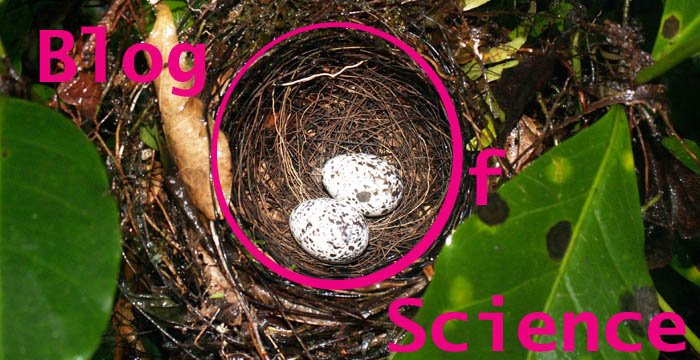
Old dried fruit bits mixed with crumbs of my daughter's favorite crackers, all spilling from a torn, unmarked plastic bag: an excellent find. Pumpkin seeds scattered on the shelf along with some paprika and vegi-broth powder: perfect. The back of the pantry is just the place when the bird-seed runs low. I have these bursts of energy, enough to refill the bird-feeder, before the coughing and the need to clutch the nearest wall return. The antibiotics have basically cleared the mycoplasma out of my lungs and ears, but the underlying virus is still there.
When the vitamin D deficiency was diagnosed, the nurse told me to take 10µg of supplement a day and come back in three months for another blood test. I didn't entirely expect to continue being sick for that whole three months, but that seems to be the result. A friend at work told me he takes 70mg of vitamin D a day, which is 7,000 times as much as I am taking, so I decided to do some research about dosage. He must mean 70µg, as he is still alive.
Different countries recommend somewhere between 10µg and 30µg per day for a healthy adult, and levels up to 100µg per day are considered entirely safe, and EU guidelines recommend this level for patients with very low serum vitamin D levels (which I have). So my piddling 10µg plus whatever tiny bits I get from my diet (they don't add vitamins to dairy here, and I'm a vegetarian) and the no sunlight I encounter probably isn't alleviating my deficiency all that fast. So I've decided to take dosage into my own hands. I'm going to start taking 50µg per day, and scale back if and when my blood test shows that I have a healthy level. I would need to take thrice that much for several months to risk vitamin D toxicity.
In the mean time, I will slump against this wall and watch the birds on the feeder. The magpie really likes those paprika-flavored raisins.
Monday, November 18, 2013


Poetry, to the limited extent I understand it, is about conveying more than is said
Mickey mouse/ Band-Aid
Tinfoil/Kool-Aid
Deck chairs
Wednesday, September 18, 2013
Monday, September 16, 2013
Thinking while sick
Back when I watched TV, which is many years ago, I would
sometimes watch Star Trek. My least favorite character was Mr. Spock. My
objection to Spock was that he was extremely foolish in a way that he should
have been smart enough to recognize and correct. His foolishness was based in
his refusal to admit the importance of understanding emotion and psychology. He
would respond to any statement about feelings influencing actions with,
"That's illogical," without considering the fact that these statements
were also true. Feelings do influence behavior, and to deny that fact, or fail
to act on it is illogical.
I was thinking about this last night in the context of the
placebo effect. The placebo effect is surprisingly powerful, very easy to
demonstrate convincingly, and I've never heard a plausible argument for how the
physiology behind it works. There is also good evidence for a negative placebo
effect, that believing something will harm you can make it somewhat harmful.
This was on my mind because I have been sick for the last
two weeks, with a cold bad enough to keep me from getting much of anything
done, and people have started to suggest various home remedies that I am sure
don't work. However, because of the placebo effect, I wish I did believe they
worked. My inherent skepticism keeps me from gaining the demonstrable benefits
of almost any worthless snake-oil. On the other hand my previous experience of
frequent and lengthy sickness convinces me that I am likely to stay sick,
surely contributing to a negative placebo effect.
It was these thoughts, plus snippets of the Norse myths Iris
has been reading to me before bed, that I went to sleep. And what a strange
pair of dreams I. First, I dreamed I was in a bar or hall with long wooden
tables. Some of my deceased male relatives were there, as were many other
people I didn't know. I knew I had only been there long ago, as a child. A man
at another table stood, called for attention, and pointed at me. "Look
who's come back," he announced mockingly, "Why if it isn't Daniel,
the heir to a long proud line of atheists!" I was going to argue, but I
woke.
Next, I dreamt that my left thumb-nail had gotten very long
and ragged. As I tried to cut it, it started to expanded, unfold and then
unroll itself, until it was as big as a post card. It had been tightly folded
and wrapped, growing into itself. I cut it off amazed that it could have gotten
so big and ingrown without my realizing, and at how compactly wrapped it had
been. Looking at my thumb I saw a slot under the skin, maybe a half inch deep
just above the nail where the furled and folded nail had rested. Inside the
hollow there were areas where minute green plants had started to grow, and
areas with many small bloody scabs. I was happy to be able to rinse it clear, and
with that I again woke, feeling well rested and fully awake for the first time
in weeks.
How do I interpret this? I've decided that simply believing
that the placebo effect is helping should be enough to cause the placebo effect
to actually help, and that something as simple as a dream of cleansing should
be enough to trigger this positive cycle. At present, I am not interested in
hearing alternative explanations.
Wednesday, February 20, 2013
A strange sort of consolation
Last year about this time I was working feverishly on a grant application to the National Institute on Aging (NIA), one of the National Institutes of Health. The specific grant I and my collaborators applied for is called an R21 (Exploratory/Developmental); it is sort of a starter grant for people who need money to do the background work to develop the proven methods and concepts you need to apply for their main type of grant, the R01. We submitted the application last winter, and got the fairly positive feedback from the scientific committee in the summer. They ranked it as being in the top 13% of applications in terms of scientific merit. Not wonderful, not terrible. By far the best (I am told) of the R21s reviewed by this particular scientific committee. This roughly means that if they funded 13% of the applications (all R##s combined), we would likely get funded.
In the fall we heard that our application had undergone final administrative review, but we didn't get any yea or nay answer until January, after the grant would have started, when they told us that we wouldn't get the grant this year but please improve a few things that the reviewers complained about and resubmit.
In preparing the application last year, I read a blog post saying that applications for R21s and R03s (another smaller grant) were pretty much a waste of time. The way the review process works, they are in direct competition with R01s, which are by their nature more mature projects, and are given 12 pages instead of 6 to make their case. Less money+less space+less mature project= very small chance of a small payoff was the argument. We decided the type of work we were proposing was exactly what the R21 was intended for, and was exploratory/developmental enough to have little chance at an R01, so we would go ahead and just try to beat the odds. (He may have run out on his last three wives, but surely he'll change for me!)

As of the beginning of this year, and as of now, all US federal agencies don't know what their budget for the current year is. What do you do when you don't know if you have money to spend? You don't spend it. So it turns out the NIA funding rate for R03s and R21s for this years is a whopping 0%. Yep, every single application for those types of grants was rejected. Some R01s were funded, but not so many. I try not to think of the absurd amount of time I put into writing my 0% chance of success application. We won't be resubmitting our R21 grant this year, and I don't plan to submit more applications to NIH in the near future. I do hope Congress gets their act together some time soon. There are an awful lot of American scientists in Europe these days.
In the fall we heard that our application had undergone final administrative review, but we didn't get any yea or nay answer until January, after the grant would have started, when they told us that we wouldn't get the grant this year but please improve a few things that the reviewers complained about and resubmit.
In preparing the application last year, I read a blog post saying that applications for R21s and R03s (another smaller grant) were pretty much a waste of time. The way the review process works, they are in direct competition with R01s, which are by their nature more mature projects, and are given 12 pages instead of 6 to make their case. Less money+less space+less mature project= very small chance of a small payoff was the argument. We decided the type of work we were proposing was exactly what the R21 was intended for, and was exploratory/developmental enough to have little chance at an R01, so we would go ahead and just try to beat the odds. (He may have run out on his last three wives, but surely he'll change for me!)

Even this rather fierce looking hawk wouldn't have gotten an R21
As of the beginning of this year, and as of now, all US federal agencies don't know what their budget for the current year is. What do you do when you don't know if you have money to spend? You don't spend it. So it turns out the NIA funding rate for R03s and R21s for this years is a whopping 0%. Yep, every single application for those types of grants was rejected. Some R01s were funded, but not so many. I try not to think of the absurd amount of time I put into writing my 0% chance of success application. We won't be resubmitting our R21 grant this year, and I don't plan to submit more applications to NIH in the near future. I do hope Congress gets their act together some time soon. There are an awful lot of American scientists in Europe these days.
Monday, February 11, 2013
Better measures of tiny bits of living jelly
My student and I had a paper accepted last week. I like this paper a lot. First some official details, then a short story about how the paper came to be.
Part of why I like this paper so much is that my student did most of the hard parts, and the reviewers didn't ask for a lot of changes, and the editor (Dr. Russell Death) moved things along quickly and efficiently, so it is the first paper I've published that didn't feel like pulling my own teeth. It is a solid methods paper. It says, "here is a method for doing something that many scientists may want to do, that we didn't know a good way to do before."
In particular, it is a simple way to accurately and easily measure a tiny transparent aquatic animal with no hard parts or consistent shape without harming it. Take a picture of it and with a bit of simple math calculate its surface area. Simple, elegant, inexpensive, non-invasive, biologically meaningful, everything I hoped it would be.
But the method presented in the paper is a substantially different, and better, method than the one we started out with. In fact, we were almost ready to submit the paper when we changed the method drastically.
I started out just wanting to measure a hydra polyp because it was necessary for another research project. Nobody had a method that worked halfway decently without killing the hydra. A hydra's body, although it shortens and lengthens, bends and twists is almost always roughly a deformed cylinder. So I said, "Hey Josi" (that's my student), why don't we develop a method to measure a hydra by photographing it and estimating its volume as though it was cylinder?" She agreed, and off we went, taking photos of hydra during our whole research project, for almost two years. We finished gathering our data, and found that indeed we could measure hydra this way. It didn't work great, but it kinda worked. You could use it to tell the difference between a really huge hydra and one that was just kind normal. Viola, unimpressive but probably publishable methods paper.
We wrote it up and were pretty close to submitting when I decided to see what hydra focussed papers had come out recently, and found that someone else had just published almost the exact same method in a nice paper with an interesting biological point. Our formulation of that method didn't work any better than hers did, and we had no point beyond "here is how to measure." We couldn't publish the same method again, even if we came up with it independently. After some cursing and self-recriminations for being so slow, I decided to see if it was possible to salvage anything of the methods paper. Josi took another set of photos and I used them to repeatedly adjust my formula, with limited biological reasoning, until something worked better than the formula just published. In fact, one formula I came up with by eyeballing my graphs worked much better than the method just published. So much better that the calculated value hardly changed at all even when the shape of the hydra changed drastically.
Now you are probably saying to yourself that this is blatant cheating. Trying different formulas (perhaps 100 of them) until something gives you the result you want is a pretty sure way to get the result you want, if you are persistent enough. But two things combined to make this not just okay, but beautiful. First, the formula I stumbled upon made obvious biological sense, even before I knew it worked. This formula represents a hydra as a roughly cylindrical bag whose skin stretches as it elongates itself, or folds and ripples as it contracts. In other words, it describes a hydra accurately and reveals something I didn't previously know about the way a hydra moves. Secondly, and as importantly, when I applied the formula to the main data set, which I didn't use to develop the formula, it still gave a highly consistent measurement for any individual, even as the shape of the individual changed. The method in fact works for completely different populations of hydra. You could take two hydra that looked the same size under the microscope and conclusively decide that one was bigger than the other. You could tell how much a young hydra grew each day. You could really measure the buggers, eliminating most of the noise inherent to previous methods.
Still more lovely, the method Josi and I had just developed could make use of the photos and measurements we had already taken, so redoing all our calculations and figures required Josi to write only a few extra lines of code (Thank you Josi, thank you R). We did a little rewriting to compare our method favorably to our other method,blamed attributed the other method on to the person who had just published it, made our biological argument to explain why the method worked, and we had a drastically improved paper ready to submit. There is a lesson in this somewhere about the scientific method.
Forthcoming in "Marine and Freshwater Research"
The consistent, non-destructive measurement of small proteiform aquatic animals with application to the size and growth of hydra
Daniel Levitis and Josephine Goldstein
Abstract: Hydra (Cnidaria), the basal metazoan most often studied in cellular, molecular and developmental biology, is difficult to measure because it is small, proteiform and aquatic. To facilitate broader organismal and ecological study of Hydra, we evaluate three methods whereby a polyp's body column can be measured by means of photomicroscopy. The volume, cylindrical surface area and surface area corrected for changes in body shape are all highly repeatable methods (r=0.97) when shape varies little. However, shape changes alter volume and cylindrical surface area. Repeated corrected surface area measures of the same individuals in markedly different positions yield standard deviations that are less than 5% of the mean measured area. This easy, non-lethal means of individual size measurement explicitly accounts for the flexible morphology of a polyp's hydrostatic skeleton. It therefore allows for the elucidation of how growth and size vary over time, age and food intake. We find that hydra change size dramatically day to day, and that while food level influences adult size, it has little effect on the early growth of recently detached buds. Finally, we discuss ecological and biological applications of this method.
Part of why I like this paper so much is that my student did most of the hard parts, and the reviewers didn't ask for a lot of changes, and the editor (Dr. Russell Death) moved things along quickly and efficiently, so it is the first paper I've published that didn't feel like pulling my own teeth. It is a solid methods paper. It says, "here is a method for doing something that many scientists may want to do, that we didn't know a good way to do before."
In particular, it is a simple way to accurately and easily measure a tiny transparent aquatic animal with no hard parts or consistent shape without harming it. Take a picture of it and with a bit of simple math calculate its surface area. Simple, elegant, inexpensive, non-invasive, biologically meaningful, everything I hoped it would be.
But the method presented in the paper is a substantially different, and better, method than the one we started out with. In fact, we were almost ready to submit the paper when we changed the method drastically.
I started out just wanting to measure a hydra polyp because it was necessary for another research project. Nobody had a method that worked halfway decently without killing the hydra. A hydra's body, although it shortens and lengthens, bends and twists is almost always roughly a deformed cylinder. So I said, "Hey Josi" (that's my student), why don't we develop a method to measure a hydra by photographing it and estimating its volume as though it was cylinder?" She agreed, and off we went, taking photos of hydra during our whole research project, for almost two years. We finished gathering our data, and found that indeed we could measure hydra this way. It didn't work great, but it kinda worked. You could use it to tell the difference between a really huge hydra and one that was just kind normal. Viola, unimpressive but probably publishable methods paper.
We wrote it up and were pretty close to submitting when I decided to see what hydra focussed papers had come out recently, and found that someone else had just published almost the exact same method in a nice paper with an interesting biological point. Our formulation of that method didn't work any better than hers did, and we had no point beyond "here is how to measure." We couldn't publish the same method again, even if we came up with it independently. After some cursing and self-recriminations for being so slow, I decided to see if it was possible to salvage anything of the methods paper. Josi took another set of photos and I used them to repeatedly adjust my formula, with limited biological reasoning, until something worked better than the formula just published. In fact, one formula I came up with by eyeballing my graphs worked much better than the method just published. So much better that the calculated value hardly changed at all even when the shape of the hydra changed drastically.
Now you are probably saying to yourself that this is blatant cheating. Trying different formulas (perhaps 100 of them) until something gives you the result you want is a pretty sure way to get the result you want, if you are persistent enough. But two things combined to make this not just okay, but beautiful. First, the formula I stumbled upon made obvious biological sense, even before I knew it worked. This formula represents a hydra as a roughly cylindrical bag whose skin stretches as it elongates itself, or folds and ripples as it contracts. In other words, it describes a hydra accurately and reveals something I didn't previously know about the way a hydra moves. Secondly, and as importantly, when I applied the formula to the main data set, which I didn't use to develop the formula, it still gave a highly consistent measurement for any individual, even as the shape of the individual changed. The method in fact works for completely different populations of hydra. You could take two hydra that looked the same size under the microscope and conclusively decide that one was bigger than the other. You could tell how much a young hydra grew each day. You could really measure the buggers, eliminating most of the noise inherent to previous methods.
Still more lovely, the method Josi and I had just developed could make use of the photos and measurements we had already taken, so redoing all our calculations and figures required Josi to write only a few extra lines of code (Thank you Josi, thank you R). We did a little rewriting to compare our method favorably to our other method,
Wednesday, December 19, 2012
Unboiling letters of recommendation
Laboratory work, especially demographic laboratory work, is labor intensive. (Perhaps that is why it is called a laboratory?) I couldn't do the experiments I do without lots of reliable helpers. At the Institute where I work, and at most universities I've seen, much of this labor comes from eager young undergraduate students. They work hard (if carefully chosen), want to learn and don't cost a great deal.
This is the last week I will employ most of my wonderful mob of students, and so today I am writing letters of recommendation for almost all of them. I've gotten to know most of them quite well, and I like all of them, so it shouldn't be such a hard task. But of course I have found a way to make it hard. I feel I owe it to them to write a memorable individual letter for each person, not a formulaic boilerplate with a few details changed. And while their personalities are very different, many of the positive things I can say about them in these letters are all the same, leading to boilerplatedness. I suppose the need for creativity within constraints such as these should be taken as an artistic challenge.
This is the last week I will employ most of my wonderful mob of students, and so today I am writing letters of recommendation for almost all of them. I've gotten to know most of them quite well, and I like all of them, so it shouldn't be such a hard task. But of course I have found a way to make it hard. I feel I owe it to them to write a memorable individual letter for each person, not a formulaic boilerplate with a few details changed. And while their personalities are very different, many of the positive things I can say about them in these letters are all the same, leading to boilerplatedness. I suppose the need for creativity within constraints such as these should be taken as an artistic challenge.
Wednesday, December 12, 2012
Unbe-fricken-lievable incom-shitforbrains-petence
So we just, finally, got the re-typeset copy of our previously mangled article back. The good news is that relatively few modifications were made this time. The bad news is that the production editor sent the wrong version of the paper for typesetting. This is the draft we sent them last summer, rather than the up-to-date version from this fall. Where the hell did they find this guy?


Friday, December 07, 2012
Traditionally successful
I have had a hand in advising several doctoral students, but
none of them have been my student in the sense that I am their major professor
(what the Germans would call Doctorvater*) because I have not been a professor.
Starting in January I will be an assistant professor, and starting in February
I will have my first for-realsies doctoral student. She and I have already
worked together for some years, and written papers together, and I am confident
that she will be wonderfully successful.
That said, it would be irresponsible of me not to think
through what barriers could arise that would potentially threaten the
successful completion of her doctoral work. Of course there are all sorts of
logistical and scientific questions to consider in designing her research, to
make sure it will produce something that will be publishable and launch her on
a successful career. But I have known enough doctoral students who stopped
before getting a doctorate that I feel like I have a fair sense of what goes wrong,
and the scientific difficulties (e.g., almost getting killed in Papua New
Guinea) tend to cause delays, rather than make people stop altogether. I have
not known any doctoral students who failed, in the sense that they produced
dissertations that were simply indefensible. I have known many who didn't
produce a dissertation or receive a PhD.
These nondissertators were in my experience no less bright,
driven or well resourced than other doctoral students. Some of them suffered
from health problems, scientific set-backs or family emergencies that exacerbated their situations.
But the characteristic that unites them is that they were poorly matched with
their Doctorvaters or Doctormutters. Sometimes it was a simple personality
conflict, but more often the mismatch was in terms of the advising style and
the need for advice. Students who need guidance and aid often end up with
ultra-busy hands-off advisers. Students who need to be left alone to do what
they already know how to do sometimes end up with micromanagers. I spent a fair
bit of time as a doctoral student thrashing around, not getting as much advise
as I needed, not even knowing what the rules of the university were. A good friend in another lab wasted a lot of time fighting with
her adviser whose overzealous attempts to advise were often an impediment. Both
of us at times considered dropping out, transferring to other labs, or
committing felonies, but a combination of luck, pigheadedness and good burritos
got us through. We had several peers who took other paths in response to
adviser mismatch. It is a very rare student who will go to her adviser and say,
"I want you to alter your approach to advising," and not all advisers would respond positively. I hope that my
student will say this to me if necessary, and knowing her, I think she will. If
she doesn't, I'll ask.
In the academic world, leaving the academic world is
generally thought of, and often spoken of, as failing. If you are in a doctoral
program and leave without your doctoral degree you fail. If you get your
doctorate and then make a career in academia, you succeed. What I have done is
clearly success, so to do otherwise is clearly failure. This is of course a
definition born of bias and self-congratulation. My job as a Doctorfater is to
simultaneously help my student to succeed in the traditional sense and to make
it clear that other paths are not necessarily failures. Producing a garbage dissertation
is failure. Finding an alternate route to a happy productive life is not. I
hope that making this clear will help my student succeed, in the traditional
sense.
*Vater in German is pronounced like 'Fah-tar' in English and
means father. It has only just now occurred to me that Darth Vader's name was
rather a large hint.
Wednesday, November 28, 2012
Immortaly Tomfoolery
Their is a saying among scientists that the more you know about the scientific subject a journalist is writing about, the less of what he writes makes any sense. There is a long new article in the New York Times magazine about a hydrozoan jellyfish, Turritopsis dohrnii, which the author claims holds the key to immortality. As someone who happens to work on hydrozoans, and on aging, I can assure you that not a bit of it makes any sense. The title, "Can a Jellyfish Unlock the Secret of
Immortality?" should be a dead giveaway that this is magical thinking
with a whitewash of pseudoscience. The argument behind the article, striped of its misunderstandings and untruths, goes something like this:
1. There is this jellyfish that can develop back from the medusa phase, which we normally think of as the adult, to the polpy phase, which we normally think of as the juvenile. It can then develop into the medusa phase again.
2. We are going to assume that this is the only know case of an organism that does not show a human-like pattern of aging.
3. We are going to assume that this non-human like pattern is equivalent to immortality.
4. We are going to assume that if we understood the mechanisms behind this assumed immortality, we would know how to make humans immortal.
5. We would know by now what makes them immortal except that we are going to assume that the one researcher I talked to extensively for the article who studies the species is the only one doing so.
6. We are going to assume that this one researcher is unfunded and working alone not because he is considered a crackpot, but because the rest of science is just too blind and lazy to see the importance of this man and his work.
7. We are going to assume that when he has learned a little bit more, we will achieve immortality.
I do not recommend that you read it, and mention it only because I have been asked about it, and because I would like to speak briefly about the word immortality. Immortality is defined as immunity from death. Immortal beings cannot be killed. Turritopsis dohrnii can very easily be killed. Put one out of water for a few minutes, feed it to a predatory snail, heat it, freeze it, slice, dice or frappe it, and it will be dead. Ergo not immortal. However the journalists are not to blame for the misuse of the word. A very good recent paper in PNAS from a very good careful research group is titled, "FoxO is a critical regulator of stem cell maintenance in immortal Hydra." They use the word immortal as many people in bio-gerontology do, to mean that the risk of death does not increase with age. My general impression is that using the word in this way is misleading, but that it is a lot flashier than 'nonsenescing' and therefore widely used.
1. There is this jellyfish that can develop back from the medusa phase, which we normally think of as the adult, to the polpy phase, which we normally think of as the juvenile. It can then develop into the medusa phase again.
2. We are going to assume that this is the only know case of an organism that does not show a human-like pattern of aging.
3. We are going to assume that this non-human like pattern is equivalent to immortality.
4. We are going to assume that if we understood the mechanisms behind this assumed immortality, we would know how to make humans immortal.
5. We would know by now what makes them immortal except that we are going to assume that the one researcher I talked to extensively for the article who studies the species is the only one doing so.
6. We are going to assume that this one researcher is unfunded and working alone not because he is considered a crackpot, but because the rest of science is just too blind and lazy to see the importance of this man and his work.
7. We are going to assume that when he has learned a little bit more, we will achieve immortality.
I do not recommend that you read it, and mention it only because I have been asked about it, and because I would like to speak briefly about the word immortality. Immortality is defined as immunity from death. Immortal beings cannot be killed. Turritopsis dohrnii can very easily be killed. Put one out of water for a few minutes, feed it to a predatory snail, heat it, freeze it, slice, dice or frappe it, and it will be dead. Ergo not immortal. However the journalists are not to blame for the misuse of the word. A very good recent paper in PNAS from a very good careful research group is titled, "FoxO is a critical regulator of stem cell maintenance in immortal Hydra." They use the word immortal as many people in bio-gerontology do, to mean that the risk of death does not increase with age. My general impression is that using the word in this way is misleading, but that it is a lot flashier than 'nonsenescing' and therefore widely used.
Friday, November 23, 2012
Have I mentioned?
I'm now the Secretary/Treasurer of the Evolutionary Demography Society, which now exists. I'll be starting as an Assistant Professor at the University of Southern Denmark in January. We'll be moving to Odense the middle of the month. I have a terrible head cold and need to catch up on sleep. I'll soon have my first lab group that officially exists. My daughter can finally use a spoon without getting most of the food on everything but her mouth. The African violet on my desk is blooming very nicely. My cat is down to a relatively healthy weight, but I am not. I am going to sleep.
The Evolutionary Demography Society is born
We are pleased to announce the formation of the
Evolutionary Demography Society (EvoDemoS)
and to invite interested researchers to join. While many societies include life-history evolution or evolutionary demography within the range of topics they consider, no active society focuses on these topics across taxa and disciplines. EvoDemoS is intended to fill this gap.
EvoDemoS is an interdisciplinary scientific society dedicated to the study of the interactions of ecology and evolutionary biology with demography, including but not limited to patterns of mortality, reproduction and migration over age, stage and state and the evolutionary processes that produce those patterns. All taxa and methodologies are of interest. Our primary goal is to facilitate communication between researchers, and as such we are pleased to offer free membership for 2013 to any interested researcher. We invite members from students to established experts. We will organize yearly meetings to provide a specific forum for evolutionary demography. Our first meeting will be in Odense, Denmark in October of 2013, and will be open only to society members. Membership can be gained by emailing your name, preferred email address, affiliation and a sentence describing your research interests to:
evodemo-list@demogr.mpg.de
Questions and comments can be addressed to this same address.
Please feel free to distribute this announcement broadly.
Sincerely,
The Board of the Evolutionary Demography Society
President
James W. Vaupel, Max Planck Institute for Demographic Research and University of Southern Denmark
Vice President
Shripad Tuljapurkar (Tulja), Stanford University
Secretary/Treasurer
Daniel A. Levitis, Max Planck Institute for Demographic Research and University of Southern Denmark
Board Members
Anne M. Bronikowksi, Iowa State University
James R. Carey, University of California, Davis
Hal Caswell, Woods Hole Oceanographic Institution
Charlotte Jessica E. Metcalf, University of Oxford
Tim Coulson, Imperial College London
Timothy Gage, State University of New York at Albany
Jean-Michel Gaillard, Université de Lyon and Centre national de la recherche scientifique
Thomas B. Kirkwood, Newcastle University
Daniel H. Nussey, University of Edinburgh
Fanie Pelletier, L'Université de Sherbrooke
Deborah Roach, University of Virginia
Rudi G.J. Westendorp, Leiden University
Evolutionary Demography Society (EvoDemoS)
and to invite interested researchers to join. While many societies include life-history evolution or evolutionary demography within the range of topics they consider, no active society focuses on these topics across taxa and disciplines. EvoDemoS is intended to fill this gap.
EvoDemoS is an interdisciplinary scientific society dedicated to the study of the interactions of ecology and evolutionary biology with demography, including but not limited to patterns of mortality, reproduction and migration over age, stage and state and the evolutionary processes that produce those patterns. All taxa and methodologies are of interest. Our primary goal is to facilitate communication between researchers, and as such we are pleased to offer free membership for 2013 to any interested researcher. We invite members from students to established experts. We will organize yearly meetings to provide a specific forum for evolutionary demography. Our first meeting will be in Odense, Denmark in October of 2013, and will be open only to society members. Membership can be gained by emailing your name, preferred email address, affiliation and a sentence describing your research interests to:
evodemo-list@demogr.mpg.de
Questions and comments can be addressed to this same address.
Please feel free to distribute this announcement broadly.
Sincerely,
The Board of the Evolutionary Demography Society
President
James W. Vaupel, Max Planck Institute for Demographic Research and University of Southern Denmark
Vice President
Shripad Tuljapurkar (Tulja), Stanford University
Secretary/Treasurer
Daniel A. Levitis, Max Planck Institute for Demographic Research and University of Southern Denmark
Board Members
Anne M. Bronikowksi, Iowa State University
James R. Carey, University of California, Davis
Hal Caswell, Woods Hole Oceanographic Institution
Charlotte Jessica E. Metcalf, University of Oxford
Tim Coulson, Imperial College London
Timothy Gage, State University of New York at Albany
Jean-Michel Gaillard, Université de Lyon and Centre national de la recherche scientifique
Thomas B. Kirkwood, Newcastle University
Daniel H. Nussey, University of Edinburgh
Fanie Pelletier, L'Université de Sherbrooke
Deborah Roach, University of Virginia
Rudi G.J. Westendorp, Leiden University
Wednesday, November 21, 2012
Context
It is a real challenge to write papers that say, "here is what is wrong with this body of work I am reviewing" in a way that doesn't make the people who wrote that work feel like I am a nit-picky asshole. So I go back through my drafts multiple times, looking for things that are poorly stated or abrasive, and trying to fix them without losing the meaning. Then I send the draft to colleagues and ask them to look for anything I missed. I may still come across as a picker of nits, but I have minimized the insult as much as possible.
I am scheduled to give an interview to a radio reporter who wants comments from a not-involved scientist on a recent paper. I happen to know the senior author on that paper very slightly. In this situation I have none of the ability I would normally employ to go back and make sure the things I am saying aren't abrasive, overstated or unfounded. Rather the reporter has both the ability and the motive to find the most dramatic and controversial thing I say and put it in a context of her choosing.
Imagine that I say to the reporter, "This is really an excellent paper, that greatly increases our understanding of poodles and how fancy they are. I'm not much of a poodle-fancier myself, and hadn't known there were so many kinds, let alone that they could do back flips so successfully. I would have worried that I would break their necks doing these experiments, but these guys clearly knew what they were doing. I may have to go out and get a couple of poodles."
The reporter could reorganize as follows: "A new study out of Paris has concluded that poodles are the fanciest dogs around. The authors compared the fanciness of a wide range of dog breeds on a variety of measures, and poodles took the cake, paws down. But not everyone in the field is fond of poodles. Dr. Daniel Levitis of Rostock, Germany is, 'not much of a poodle-fancier myself.' In fact, he says, 'I may have to go out and get a couple of poodles' What would he do with them? 'I would break their necks.' So clearly there is still great scientific controversy regarding the worth of poodles."
I've been advised to avoid saying anything the least bit critical about the paper in question, myself, the authors or the weather, and instead to try to talk as much as possible about my own work. We'll see how that works out.
I am scheduled to give an interview to a radio reporter who wants comments from a not-involved scientist on a recent paper. I happen to know the senior author on that paper very slightly. In this situation I have none of the ability I would normally employ to go back and make sure the things I am saying aren't abrasive, overstated or unfounded. Rather the reporter has both the ability and the motive to find the most dramatic and controversial thing I say and put it in a context of her choosing.
Imagine that I say to the reporter, "This is really an excellent paper, that greatly increases our understanding of poodles and how fancy they are. I'm not much of a poodle-fancier myself, and hadn't known there were so many kinds, let alone that they could do back flips so successfully. I would have worried that I would break their necks doing these experiments, but these guys clearly knew what they were doing. I may have to go out and get a couple of poodles."
The reporter could reorganize as follows: "A new study out of Paris has concluded that poodles are the fanciest dogs around. The authors compared the fanciness of a wide range of dog breeds on a variety of measures, and poodles took the cake, paws down. But not everyone in the field is fond of poodles. Dr. Daniel Levitis of Rostock, Germany is, 'not much of a poodle-fancier myself.' In fact, he says, 'I may have to go out and get a couple of poodles' What would he do with them? 'I would break their necks.' So clearly there is still great scientific controversy regarding the worth of poodles."
I've been advised to avoid saying anything the least bit critical about the paper in question, myself, the authors or the weather, and instead to try to talk as much as possible about my own work. We'll see how that works out.
Friday, November 02, 2012
Friendly advice for writing your first grant application, actually first edition
As a first year graduate student studying birds in a university natural history museum, I largely failed to learn how to make a decent specimen out of a dead bird. While there are many reasons for my failure, including a lack of aptitude and a lack of effort, at the time it felt impossible in part because the ornithology curator who was teaching a group of us how to do it was just too good at it. She would hold up the dead bird, make a tiny incision in its belly, and then her hands would spin around it and the entire carcass of the bird would be outside of its now inverted skin, which she would hold up to show us. Then she’d grab some bits of wood and cotton, and again her hands would whirl around the bird for a few seconds, after which the bird would be right-side out and restored to a life-like shape, its feathers unruffled, its head turned to the side just so and toes overlapping, as though it was patiently listening for something. I would try to repeat this process on my assigned dead bird, would screw it up somehow, and she would come over, sigh, take the bird for a few seconds and hand it back to me, several steps ahead from where I was. Then she would say, “See?”
I never did learn, or make it in ornithology. From this I learned that of the great challenges of good teaching is that you have to know the topic well, be interested in it and have a strong aptitude for it, but you also have to be able remember what it was like to not know it at all empathize with those with less inherent aptitude.
At the time, I was also learning to write grant applications. I wrote several that first year in grad school, none of which were funded. This was partly because the ideas behind the proposal weren’t well worked out, but partly because I didn’t really know what I was doing as a grant-writer. I have now written a lot of different grant applications, lets guess 40, almost every one to a different funding source. I don’t know that I can claim to know the topic well enough to teach it, or to have a particularly strong aptitude, but I can well remember what it feels like to not know where to begin, which is a very good place to start. So with that in mind, I’m going to offer some thoughts for those trying to write their first research grant applications. I’ve recently written what I learned about applying for grants from NIH and ERC. This is going to be a lot more basic.
First, consider this picture of the time my wife turned into a giant and flattened part of southern Denmark. Pretty cool, huh? Not even Photoshopped.

Okay, now down to business.
1. Don't panic. There is a good chance it seems to you at this point like you are somehow supposed to know how grant-writing is done, and that everyone around you magically knows how to do it, but there is a good chance that no one has ever provided you with any guidance on the subject. Or at least that is where I was at when I was in your shoes. Ask for help and advice frequently. Several times during the process, have people read what you are doing so they can point out your mistakes. There is a whole culture that you haven't been initiated to, and you need a guide. The basic formula for a grant application goes like this: there is a fundamentally important question that we don't know enough about. Here is what the question is and why it is so important. Here is the piece of that question I can address, how I would address it, why that is the right way to do it, why it is feasible and why it won't fail to answer the question. Here is why I am the right person to do it. I need these resources for this part of the plan, and can't do the work without them. Reiterate the importance of the question and your future results.
2. The place to start with a grant application is to have a question you need money to answer. While that may seem horrendously obvious, I have known a fair number of graduate students who were told to apply for a certain grant, or many grants, but didn’t have a clear conception of what they needed the money for. Either the question was ill-defined (as was mine that first year) or it wasn’t really clear what the money was needed for.
3. Writing grants is a pain in the ass, and there are very few academics who wouldn’t rather be spending their time on research. We do it because we need to. That said, writing grant applications is tremendously useful to your research planning, because it gives you a hard-deadline and strict format in which you have to clearly state your research plans in a succinct and clear way. My research plans have often improved dramatically through the process of writing them into an application. Some universities require graduate students to submit a detailed research proposal before starting work on their theses. This serves the same purpose.
4. The two most common types of funding you may be applying for are for research costs and for your own stipend or salary. Small grants available to students usually focus on research costs, fellowships usually fund only stipend or salary and related costs, although some do both or are for funding travel to conferences or other specific costs. Every granting agency has rules for what each grant can or can’t be used for, and so what you apply for depends on what you need to fund.
5. There are an effectively infinite number of organizations that at least occasionally give research grants, but the chance that any one of them is the one you need to apply for is almost infinitely small. This makes finding the grants you should be applying for very difficult. The way to go about this is to avoid doing what I did. I wasted a huge amount of time online looking at listing of things I could apply for, examining the websites of various foundations, etc. Instead, ask people at your university what other students have applied for successfully. Ask faculty, other students, and the administrative staff. Most every university has people whose job it is to shepherd grant applications.
6. Whenever possible, get a copy of someone's successful grant application. Get several if you can. The instructions for every grant are different, so it is best if the application you are reading is for the same grant you are applying for. That said, there is a certain grant-like style that you will find in most applications.
7. Know your audience. Most research grants are evaluated by a small group of very busy researchers who have to get through a big pile of applications and find just a few to fund. Find out as much as you can about who these people are, and design your grant to grab their interest, and tailor it to (or slightly below) their level of knowledge of your field.
8. You need to convince them that your ideas are compelling and sound, your goals achievable and the whole thing in line with the purpose for which the grant is given. You also need to convince them that you are the person to do it. Doing all of this is harder in less space than in more. When you only have a page or two, as is often the case with the grants available to students, you can't get bogged down in the details. Your writing needs to be crisp and to the point. I often write much more than I need and then edit it down repeatedly. No matter how much time you put into writing a section, if you find it isn't necessary, cut it.
9. Beware of giving too much methodological detail. The committee reviewing the grants generally won't care what concentration your solution will be at, where you will order the food pellets or what software package you will use to analyze your data. That said, if one of those details is key to understanding what you plan to do, of course you need to include it.
10. Try to write it long enough in advance that you can set it aside and come back to it a few days later, perhaps more than once. Once you've worked it over more than a few times, you need some time away from it before you can really see it again. Very good writers can produce very bad writing when they've lost their ability to take a step back and just read.
That's my ten cents (inflation). I'm sure there are things I've missed, but those are the main lessons that I can remember learning. Good luck. Now quit browsing the internet and get back to writing.
I never did learn, or make it in ornithology. From this I learned that of the great challenges of good teaching is that you have to know the topic well, be interested in it and have a strong aptitude for it, but you also have to be able remember what it was like to not know it at all empathize with those with less inherent aptitude.
At the time, I was also learning to write grant applications. I wrote several that first year in grad school, none of which were funded. This was partly because the ideas behind the proposal weren’t well worked out, but partly because I didn’t really know what I was doing as a grant-writer. I have now written a lot of different grant applications, lets guess 40, almost every one to a different funding source. I don’t know that I can claim to know the topic well enough to teach it, or to have a particularly strong aptitude, but I can well remember what it feels like to not know where to begin, which is a very good place to start. So with that in mind, I’m going to offer some thoughts for those trying to write their first research grant applications. I’ve recently written what I learned about applying for grants from NIH and ERC. This is going to be a lot more basic.
First, consider this picture of the time my wife turned into a giant and flattened part of southern Denmark. Pretty cool, huh? Not even Photoshopped.

Okay, now down to business.
1. Don't panic. There is a good chance it seems to you at this point like you are somehow supposed to know how grant-writing is done, and that everyone around you magically knows how to do it, but there is a good chance that no one has ever provided you with any guidance on the subject. Or at least that is where I was at when I was in your shoes. Ask for help and advice frequently. Several times during the process, have people read what you are doing so they can point out your mistakes. There is a whole culture that you haven't been initiated to, and you need a guide. The basic formula for a grant application goes like this: there is a fundamentally important question that we don't know enough about. Here is what the question is and why it is so important. Here is the piece of that question I can address, how I would address it, why that is the right way to do it, why it is feasible and why it won't fail to answer the question. Here is why I am the right person to do it. I need these resources for this part of the plan, and can't do the work without them. Reiterate the importance of the question and your future results.
2. The place to start with a grant application is to have a question you need money to answer. While that may seem horrendously obvious, I have known a fair number of graduate students who were told to apply for a certain grant, or many grants, but didn’t have a clear conception of what they needed the money for. Either the question was ill-defined (as was mine that first year) or it wasn’t really clear what the money was needed for.
3. Writing grants is a pain in the ass, and there are very few academics who wouldn’t rather be spending their time on research. We do it because we need to. That said, writing grant applications is tremendously useful to your research planning, because it gives you a hard-deadline and strict format in which you have to clearly state your research plans in a succinct and clear way. My research plans have often improved dramatically through the process of writing them into an application. Some universities require graduate students to submit a detailed research proposal before starting work on their theses. This serves the same purpose.
4. The two most common types of funding you may be applying for are for research costs and for your own stipend or salary. Small grants available to students usually focus on research costs, fellowships usually fund only stipend or salary and related costs, although some do both or are for funding travel to conferences or other specific costs. Every granting agency has rules for what each grant can or can’t be used for, and so what you apply for depends on what you need to fund.
5. There are an effectively infinite number of organizations that at least occasionally give research grants, but the chance that any one of them is the one you need to apply for is almost infinitely small. This makes finding the grants you should be applying for very difficult. The way to go about this is to avoid doing what I did. I wasted a huge amount of time online looking at listing of things I could apply for, examining the websites of various foundations, etc. Instead, ask people at your university what other students have applied for successfully. Ask faculty, other students, and the administrative staff. Most every university has people whose job it is to shepherd grant applications.
6. Whenever possible, get a copy of someone's successful grant application. Get several if you can. The instructions for every grant are different, so it is best if the application you are reading is for the same grant you are applying for. That said, there is a certain grant-like style that you will find in most applications.
7. Know your audience. Most research grants are evaluated by a small group of very busy researchers who have to get through a big pile of applications and find just a few to fund. Find out as much as you can about who these people are, and design your grant to grab their interest, and tailor it to (or slightly below) their level of knowledge of your field.
8. You need to convince them that your ideas are compelling and sound, your goals achievable and the whole thing in line with the purpose for which the grant is given. You also need to convince them that you are the person to do it. Doing all of this is harder in less space than in more. When you only have a page or two, as is often the case with the grants available to students, you can't get bogged down in the details. Your writing needs to be crisp and to the point. I often write much more than I need and then edit it down repeatedly. No matter how much time you put into writing a section, if you find it isn't necessary, cut it.
9. Beware of giving too much methodological detail. The committee reviewing the grants generally won't care what concentration your solution will be at, where you will order the food pellets or what software package you will use to analyze your data. That said, if one of those details is key to understanding what you plan to do, of course you need to include it.
10. Try to write it long enough in advance that you can set it aside and come back to it a few days later, perhaps more than once. Once you've worked it over more than a few times, you need some time away from it before you can really see it again. Very good writers can produce very bad writing when they've lost their ability to take a step back and just read.
That's my ten cents (inflation). I'm sure there are things I've missed, but those are the main lessons that I can remember learning. Good luck. Now quit browsing the internet and get back to writing.
Genus species
When writing the genus and species of an organism, the genus name is capitalized, but the species name is not. Also note that both are usually italicized to differentiate them from common names.
Right: Homo sapiens
Wrong: Homo Sapiens, homo sapiens, Homo sapiens
This is a long established rule that is consistently followed by scientists but generally ignored by many science reporters and other non-scientists. It becomes very useful when taxonomic level could be unclear.
For example, the extant members of Bison are bison (the American bison) and bonasus (the European bison, or wisent). While bison has been out of immediate risk of extinction for some decades, bonasus populations remain small and have started to rise only recently in captivity and intensely managed reserves. Commercially available bison meat is bison. It is more commonly sold as buffalo meat, although the term buffalo is more properly used for Syncerus and Bubalus, rather than Bison.
It is prefered, but not in all contexts, that in scientific writing one put the abbriviated genus name ahead of the species name. This is done in part because many genera have identically named species. For example, Dendrocopos major, Parus caeruleus and Parus major are all birds of Europe. While P. major is clearly in Parus, P. caeruleus is sometimes placed in Cyanistes.
Right: Homo sapiens
Wrong: Homo Sapiens, homo sapiens, Homo sapiens
This is a long established rule that is consistently followed by scientists but generally ignored by many science reporters and other non-scientists. It becomes very useful when taxonomic level could be unclear.
For example, the extant members of Bison are bison (the American bison) and bonasus (the European bison, or wisent). While bison has been out of immediate risk of extinction for some decades, bonasus populations remain small and have started to rise only recently in captivity and intensely managed reserves. Commercially available bison meat is bison. It is more commonly sold as buffalo meat, although the term buffalo is more properly used for Syncerus and Bubalus, rather than Bison.
It is prefered, but not in all contexts, that in scientific writing one put the abbriviated genus name ahead of the species name. This is done in part because many genera have identically named species. For example, Dendrocopos major, Parus caeruleus and Parus major are all birds of Europe. While P. major is clearly in Parus, P. caeruleus is sometimes placed in Cyanistes.
Thursday, November 01, 2012
Thank a meteorologist
Where I live, or rather in several of the places where I have lived, meteorology often seems to have about as much predictive accuracy as astrology. The German weather website wetter.com predicts rain for Rostock all afternoon and evening, starting 2 hours from now, while windfinder.com predicts no precipitation at all today. It is currently raining.
Because this kind of obvious failure of retail meteorology is so common, bashing ‘the weatherman’ is a popular and easy past time, and I think this shapes the views of many people on meteorology generally. But when things like Hurricane Sandy do things like this to a densely populated portion of a continent and kill only dozens of people, rather than tens of thousands, that is because of the very healthy state of meteorological science.
Imagine, if you will, the impact of Sandy on the U.S. if meteorology hadn’t progressed in the last hundred years. We would have gotten reports of a hurricane hitting Jamaica, Hispaniola and then Cuba. Folks in New Orleans, hit by Katrina a few years earlier, with even less warning than in the real world, would start evacuating, along with much of Florida and the Gulf Coast. No telling where this thing might hit. New Jersey and New York would scarcely take notice. When Sandy clobbered the Bahamas, people in the Carolinas would need to evacuate fast. Who knows who the monster is coming for? Two days later when the surf in New Jersey started getting really rough, and the wind really strong, the idea that New Jersey and New York could get hit would occur to a lot of people. But what does it mean to get hit? Lots of rain and wind? Flash floods? Would anyone have guessed that there would be a nearly 14 foot storm surge in New York City, flooding houses, lobbies and subway tunnels with seawater? Would lower Manhattan have been evacuated at all? Would there have been time to get out? I doubt it.
My guess is the East Coast would have been far less prepared than New Orleans was for Katrina, because people in real world New Orleans, even if their government let them down, could turn on the TV and know what was coming. In a meteorology-free New York, the idea of large parts of the city being underwater would have seemed ridiculous until walls of water were ripping through tunnels still full of people.
We have come to take for granted that we should be warned, accurately, of major weather events days in advance, and we grumble about the uncertainties and inaccuracies. There is certainly still room for improvement. But the fact that New Jersey was named as one likely landfall while the center of the storm was not yet to Cuba is absolutely amazing. That requires a level of understanding and predictive computing that I find hard to fathom. It frankly seems a bit like magic. The National Hurricane Center nailed this one, and in so doing prevented tens of billions of dollars in damages and tens of thousands of lives. Somebody deserves a medal. Thank you meteorology.
Monday, October 22, 2012
Idiozia
I love Italy. Friendly people, good food, great art, nice weather, etc. But there is something in Italian governance traditions that make me feel okay about not living there. Prime examples are Berlusconi and this, the conviction of six seismologists and a government functionary for failing to predict an earthquake in L'Aquila that killed 309 people in 2009. More exactly, they issued a report that said that it wasn't possible to predict whether or not their would be a major earthquake that year, but estimated the probability as fairly low. The earthquake came, and they are the scapegoats.
Imagine if you will that an Italian man goes to the doctor, and asks if he is going to have a stroke that year. The doctor gives him an exam, some blood tests and a questionnaire, then uses the best available methods to estimate that this man has only a 10% chance of having a heart attack that year. The man goes for a hike, has a heart attack, dies. Should the doctor go to jail for failing to know for sure that the heart attack is coming? Of course not. We don't put people in jail for failing to know things that no one could possibly know. We don't, but apparently the Italian courts do.
Now imagine the Italian government comes to you next week and wants you to produce an expert report on an unpredictable topic for them. Would you be eager to help?
Imagine if you will that an Italian man goes to the doctor, and asks if he is going to have a stroke that year. The doctor gives him an exam, some blood tests and a questionnaire, then uses the best available methods to estimate that this man has only a 10% chance of having a heart attack that year. The man goes for a hike, has a heart attack, dies. Should the doctor go to jail for failing to know for sure that the heart attack is coming? Of course not. We don't put people in jail for failing to know things that no one could possibly know. We don't, but apparently the Italian courts do.
Now imagine the Italian government comes to you next week and wants you to produce an expert report on an unpredictable topic for them. Would you be eager to help?
Tuesday, October 16, 2012
Friendly advice for your first grant application, ERC edition
Earlier this year I wrote a fairly long post about the experience and lessons of completing my first NIH grant application (nightmare). While I still haven't heard back if NIH are going to fund me, the good news is that my application has been deemed to at least have the scientific merit for funding (the scientific review board ranked it ahead of almost all of the other applications). Now they have to decide if it makes sense for them administratively to fund it. I should hear some time this month, I hope.
In the mean time I've been applying for more grants (three applications I'm involved in have been submitted in the last three weeks), because what else is there for scientists to do? I've just completed my first grant application to the European Research Council (ERC). I've heard from several people that my NIH post was helpful, so I'm going to offer a few of my thoughts on the ERC process.
Before we start, think about how cool nature is. For example, consider this American Dipper my wife and I saw in Lassen Volcanic National Park a few years ago.
 Now, with that in mind:
1. Don't panic. The ERC process is far less brutal and inhuman than NIH's. Where NIH's instruction booklet is 264 pages and requires numerous supplementary online documents, ERC's is 77 (really only one 40 page section of it was necessary for me, and it is well organized) and requires very little outside information. It took me far less time to complete the ERC Starting grant application than just to figure out how one in theory applies for an NIH grant, despite the fact that I was applying for eight times as much money from ERC, and the funding rate is somewhat better. The whole ERC process, including a lot of reading relevant literature I wasn't previously aware of, took me about three weeks of very hard work. There is a reason so many American academics are in Europe these days. There is no industry of writing ERC grantsmanship advice the way their is for NIH because it just isn't necessary. That said, I'll offer a few bits that may be helpful.
2. The type of grant I applied for, the ERC Starting Grant, is the one most people applying for the first time will apply for. "Starting" in this case means early in your career (at least two and no more than I think seven years since you got your PhD) rather than necessarily your first grant. They also have other grants for people later in their careers. The idea is that a promising early-career scientist applies for money to start a research group at a European university (or other academic host, like a Max Planck Institute). The host is named in the grant and has to provide a letter promising to employ the applicant for at least the duration of the grant (up to 5 years) if that application is funded. It has often been the case that applicants would apply with one host and then upon getting funded used that wad of cash an enticement to get hired somewhere else, but I hear that the ERC is trying to clamp down on that. They retain the right to tell you that you can't take it with you.
2. Try very hard to get a copy of a successful ERC application, the more recent and the closer to your field, the better. While the instructions are pretty clearly written, it is always helpful to look at how a successful application is organized. That said, make sure you follow the latest version of the instruction. A friend of mine who is also applying for an ERC this year thought he was supposed to use the 2012 instructions, because it is 2012. Silly friend! If you write your application in 2012, your application will be reviewed in 2013, so use the 2013 instructions. They don't seem to change too drastically from year to year, but they do change.
3. Be aware that when they say you have to have your PhD for at least 2 years, they mean the date physically written on your diploma has to be at least two years before they publish that year's call for applications. I wasn't eligible to apply last year because while I finished my PhD more than two years before the deadline, the somewhat later date written on my diploma was less than two years before the somewhat earlier date when the call for applications was published. They don't care about your citizenship or residency, but they do care what date is written on your diploma.
4. They review in two rounds. The first time they look at your CV and publications and a five page project description called an 'Extended Synopsis.' (Sort of like an unabridged compact edition). If you make it through the first round, they look instead at a 15 page scientific project description that includes more detail, a methods section and your proposed budget. The five pager really is a compact version of the 15 pager minus the budget, and there is no reason you can't copy and paste almost all of your text from the first into the second.
5. ERC has a list of 25 topic-specific evaluation panels that review these applications. Before you start writing, decide which panel you are aiming it at. When they publish the names of the panel chairs, be sure to look at the recent publications of your panel's chair so you know your audience.
6. You will need the help of an administrator at your proposed host. Find out who that person is and give her at least a month notice that you are applying. Chocolate is not a bad idea.
7. Oh yes, one last thing. The amount of money you can ask for doesn't depend on which country your host is in, but what you can do with that money does. My proposed host is in Denmark, which means I can hire about one third the number of people that I could in Germany with the same budget, and perhaps one tenth as many as in the least expensive EU countries. But apparently they are so focused on the scientific merit of the project and applicant (and to a lesser extent the host) that which country you propose to work in or how relatively expensive it is isn't a big concern for them.
That's about it. The three weeks I gave myself to get this done was clearly too little time, and I'm now exhausted and behind on everything else. My application probably could have used another couple of days of polishing and reading through by friends. But all in all I think the ERC process is quite reasonable.
Good luck and happy grant writing. I'm going to try to remember what papers I was working on before I started writing grants again.
In the mean time I've been applying for more grants (three applications I'm involved in have been submitted in the last three weeks), because what else is there for scientists to do? I've just completed my first grant application to the European Research Council (ERC). I've heard from several people that my NIH post was helpful, so I'm going to offer a few of my thoughts on the ERC process.
Before we start, think about how cool nature is. For example, consider this American Dipper my wife and I saw in Lassen Volcanic National Park a few years ago.

1. Don't panic. The ERC process is far less brutal and inhuman than NIH's. Where NIH's instruction booklet is 264 pages and requires numerous supplementary online documents, ERC's is 77 (really only one 40 page section of it was necessary for me, and it is well organized) and requires very little outside information. It took me far less time to complete the ERC Starting grant application than just to figure out how one in theory applies for an NIH grant, despite the fact that I was applying for eight times as much money from ERC, and the funding rate is somewhat better. The whole ERC process, including a lot of reading relevant literature I wasn't previously aware of, took me about three weeks of very hard work. There is a reason so many American academics are in Europe these days. There is no industry of writing ERC grantsmanship advice the way their is for NIH because it just isn't necessary. That said, I'll offer a few bits that may be helpful.
2. The type of grant I applied for, the ERC Starting Grant, is the one most people applying for the first time will apply for. "Starting" in this case means early in your career (at least two and no more than I think seven years since you got your PhD) rather than necessarily your first grant. They also have other grants for people later in their careers. The idea is that a promising early-career scientist applies for money to start a research group at a European university (or other academic host, like a Max Planck Institute). The host is named in the grant and has to provide a letter promising to employ the applicant for at least the duration of the grant (up to 5 years) if that application is funded. It has often been the case that applicants would apply with one host and then upon getting funded used that wad of cash an enticement to get hired somewhere else, but I hear that the ERC is trying to clamp down on that. They retain the right to tell you that you can't take it with you.
2. Try very hard to get a copy of a successful ERC application, the more recent and the closer to your field, the better. While the instructions are pretty clearly written, it is always helpful to look at how a successful application is organized. That said, make sure you follow the latest version of the instruction. A friend of mine who is also applying for an ERC this year thought he was supposed to use the 2012 instructions, because it is 2012. Silly friend! If you write your application in 2012, your application will be reviewed in 2013, so use the 2013 instructions. They don't seem to change too drastically from year to year, but they do change.
3. Be aware that when they say you have to have your PhD for at least 2 years, they mean the date physically written on your diploma has to be at least two years before they publish that year's call for applications. I wasn't eligible to apply last year because while I finished my PhD more than two years before the deadline, the somewhat later date written on my diploma was less than two years before the somewhat earlier date when the call for applications was published. They don't care about your citizenship or residency, but they do care what date is written on your diploma.
4. They review in two rounds. The first time they look at your CV and publications and a five page project description called an 'Extended Synopsis.' (Sort of like an unabridged compact edition). If you make it through the first round, they look instead at a 15 page scientific project description that includes more detail, a methods section and your proposed budget. The five pager really is a compact version of the 15 pager minus the budget, and there is no reason you can't copy and paste almost all of your text from the first into the second.
5. ERC has a list of 25 topic-specific evaluation panels that review these applications. Before you start writing, decide which panel you are aiming it at. When they publish the names of the panel chairs, be sure to look at the recent publications of your panel's chair so you know your audience.
6. You will need the help of an administrator at your proposed host. Find out who that person is and give her at least a month notice that you are applying. Chocolate is not a bad idea.
7. Oh yes, one last thing. The amount of money you can ask for doesn't depend on which country your host is in, but what you can do with that money does. My proposed host is in Denmark, which means I can hire about one third the number of people that I could in Germany with the same budget, and perhaps one tenth as many as in the least expensive EU countries. But apparently they are so focused on the scientific merit of the project and applicant (and to a lesser extent the host) that which country you propose to work in or how relatively expensive it is isn't a big concern for them.
That's about it. The three weeks I gave myself to get this done was clearly too little time, and I'm now exhausted and behind on everything else. My application probably could have used another couple of days of polishing and reading through by friends. But all in all I think the ERC process is quite reasonable.
Good luck and happy grant writing. I'm going to try to remember what papers I was working on before I started writing grants again.
Monday, October 15, 2012
In which I use some strong words on the topic of a botched editing job
So this big long review article my collaborators and I sent to a very good
scientific journal was sent for one last copy-edit before it was published.
This is normal, most journals have a copy editor look things over right before
typesetting. This particular paper had already been professionally copy edited,
but hey, there is always room for improvement. So we get back the typeset
version from the production editor (who works for the corporate publisher of
the journal and is in charge of turning the accepted paper into a formatted,
typeset publication), and an hour later, we get an email from the scientific
editor (who is a scientist in charge of deciding what gets published and makes
decisions about scientific content) that the copy editor (who works for the production editor and is only supposed
to correct grammar, punctuation and such) is an "aggressive copy
editor" and we should check the paper carefully. So we sit down to read
through the paper and figure out what this means when HOLY SHIT! I notice that
the very first sentence of our paper directly contradict the rest of its
content. And then YOU ARE FUCKING KIDDING ME?! I notice that my coauthor's name
is spelled wrong. Then LET LOOSE THE DOGS OF WAR! I see that the very central
sentence of the paper, the one that defines the really important concept that we
are introducing and talking about, no longer means anything at all. And then,
ARE YOU TRYING TO KILL ME?! I see that a paper written by a very senior
colleague who I've only slightly corresponded with is now attributed to me, as
though I wrote it. To top it off ARE YOU SOME KIND OF IDIOT?! there are now all
sorts of punctuation errors, formatting errors, random characters inserted in
the middles of words. So I think maybe that's the worst of it, and then HOW
HAVE YOU NOT BEEN FIRED YET?! I figure out that the copy editor went through
and sorta tried to rewrite the paper, adding a sentence here, taking out a
clause there, HOW IS THIS POSSIBLE inserting parenthetical phrases with no
closed parenthesis. (I DON'T UNDERSTAND! Oh, and MAKE IT STOP! the names of
the demographic phenomena have been changed to something the copy editor
thought sounded nicer.
So we figure maybe the copy editor was high on crack, and we
write to the production editor, whose job it is to make sure the copy editing
was done right, and we politely explain the problem, and ask that we would like
to make sure that we don't miss any errors that may have been introduced, and
so could we please have the list that he has of the changes that were made, and
he SATAN! SATAN! writes back a one sentence email telling us we just need to
follow the instructions he already sent. Considering I spent more than a year
in total working on this paper, I think I am handling it rather well. DOOM!
DOOM!
I have now written a somewhat less polite email to the
production editor demanding that the pre-vandalized version be used, as we
can't possibly find and mark all of the hundreds of places where the paper was
damaged. My hope is to end up working with a different production editor, one
who is not so BLATTANTLY STUPID unconcerned about the quality of the product.
Wednesday, August 29, 2012
When animals aren't 'animals.'
I know a guy who has fishing licenses in about ten states. He doesn't fish, but he does study salamanders, and according to the fishing regulations in many states, salamanders are fish and you need a fishing license to mess with them. Salamanders are of course not fish, unless you are a hard-core cladist who thinks that all vertebrates are fish. State fishing officials are not generally hard-core cladists, just people who write and enforce regulations and don’t really care if salamanders aren’t fish.
A similar situation arises when it comes to laws governing ethical animal research. If a scientist wants to passively observe a bunch of animals in the wild, she needs to go through all kinds of ethics boards and paper-work to make sure she is complying with these laws. If another scientist wants to slowly dissolve a bunch of live insects in acid, he just needs to buy some acid, because legally, invertebrate animals aren’t ‘animals.’ Animal ethics laws generally don’t apply to them. I say generally because their are particular exceptions. Switzerland and Norway consider lobsters and their relatives to be animals, so you can’t just drop them in boiling water (at least not in a scientific context), you have to kill them humanely. England extends animal protection laws to the Common Octopus, but apparently not to other less common octopuses, so it pays to be common.
For a researcher like myself, who studies invertebrates in the lab, this is a very convenient absurdity. It means that when I want to feed live brine-shrimp to my hydra, I don’t have to ask any committees to review whether the feeding is humane to the brine-shrimp or the hydra. I don’t need to get official approval for the size of container I keep barnacles in.
I approve of laws, regulations, forms and committees that require the ethical treatment of animals in research, and I try hard to follow the principles they are intended to enforce. I am also very glad I don’t personally have to deal with the red tape.
A similar situation arises when it comes to laws governing ethical animal research. If a scientist wants to passively observe a bunch of animals in the wild, she needs to go through all kinds of ethics boards and paper-work to make sure she is complying with these laws. If another scientist wants to slowly dissolve a bunch of live insects in acid, he just needs to buy some acid, because legally, invertebrate animals aren’t ‘animals.’ Animal ethics laws generally don’t apply to them. I say generally because their are particular exceptions. Switzerland and Norway consider lobsters and their relatives to be animals, so you can’t just drop them in boiling water (at least not in a scientific context), you have to kill them humanely. England extends animal protection laws to the Common Octopus, but apparently not to other less common octopuses, so it pays to be common.
For a researcher like myself, who studies invertebrates in the lab, this is a very convenient absurdity. It means that when I want to feed live brine-shrimp to my hydra, I don’t have to ask any committees to review whether the feeding is humane to the brine-shrimp or the hydra. I don’t need to get official approval for the size of container I keep barnacles in.
I approve of laws, regulations, forms and committees that require the ethical treatment of animals in research, and I try hard to follow the principles they are intended to enforce. I am also very glad I don’t personally have to deal with the red tape.
Subscribe to:
Posts (Atom)
