Showing posts with label predation. Show all posts
Monday, May 30, 2011
Reproduction
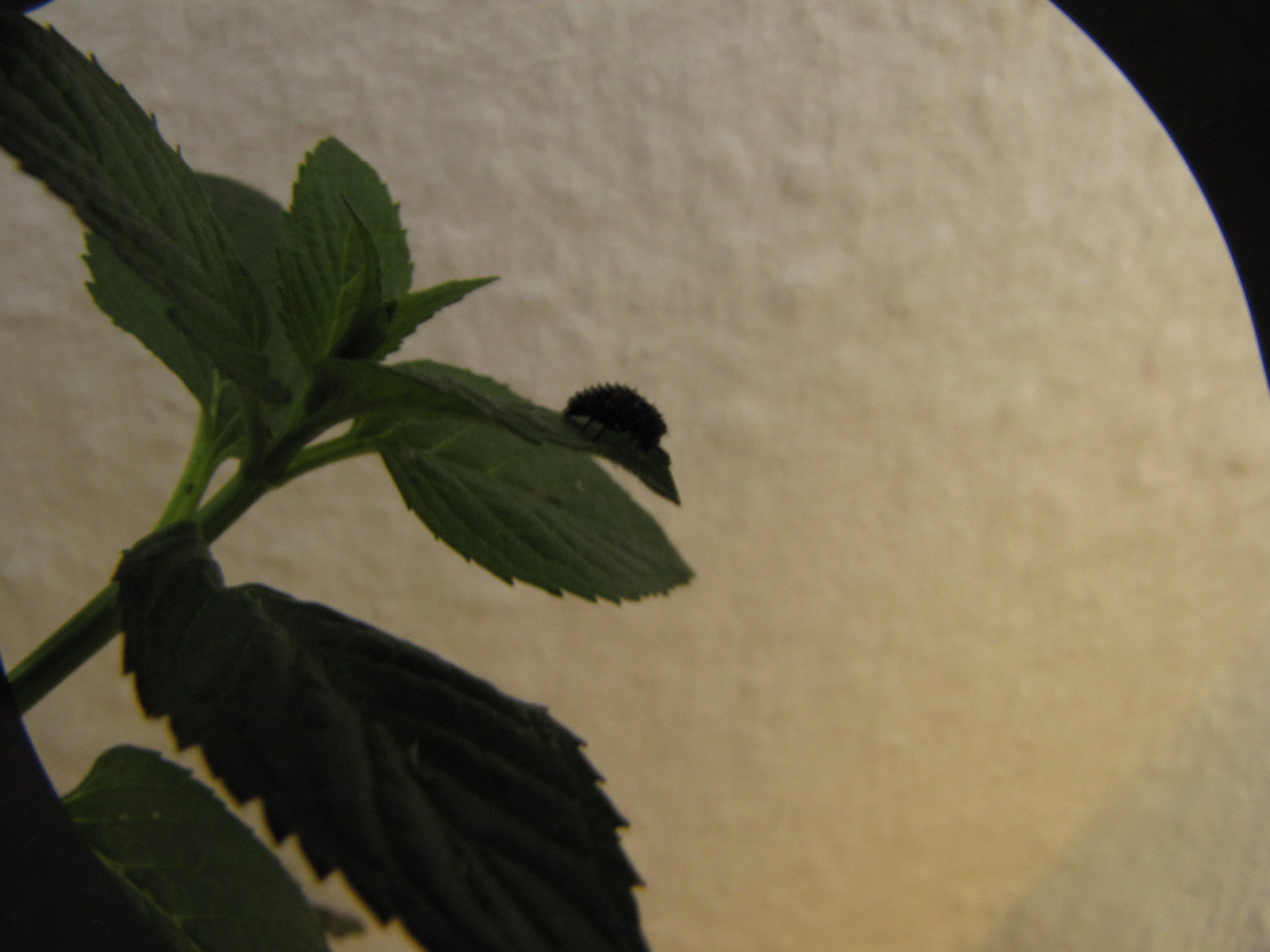
The ladybugs are successfully reproducing on our mint plant. Oh frabjous day! The larvae are crawling all over the plant scarfing down aphids like mad, and the adults are laying more eggs. It is exciting to see them doing so well.


Thursday, May 19, 2011
Bedside ecosystem
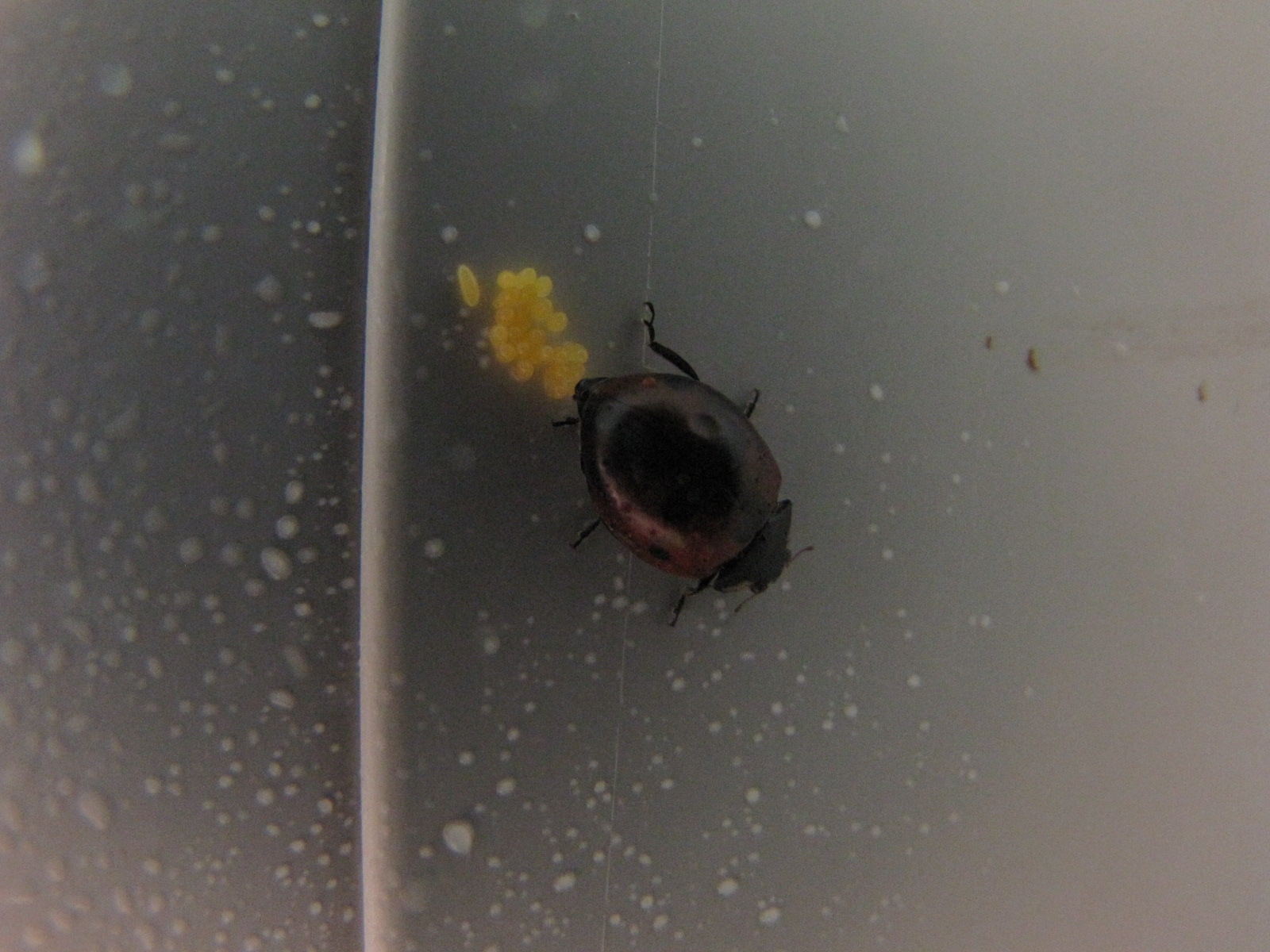
Most mornings I spritz the chocolate peppermint plant on our bedroom windowsill from a spray bottle of water. It loves to be damp. It is growing so well these days, is so juicy and luscious, that the aphids are maintaining a healthy population on it despite my best efforts to squish them and the depredations of the ladybugs. This of course leads the ladybugs to congregate on the mint, as the aphids, thrips and whiteflies have been picked clean off our other plants. And you know what happens when beetles congregate in the spring. This morning as I was spraying, I noticed one of the ladybugs laying eggs on the window frame!
There are about 30 eggs so far and she is still laying. The great thing about this is that labybug larvae are wonderful aphid predators, and don't fly away the way the adults do. So I'm going to transfer the eggs onto a leaf and hope they hatch.
Friday, March 11, 2011
March of the Beetles
I like to have edible plants in the house. We have mint, basil and a Thai chili plant at the moment. We had oregano, but it didn't make it through the long sunless months. One of the drawbacks to having edible plants year round is that it means we also have aphids year round. All winter long I have been keeping them in check by spending a few minutes each morning squishing them or wiping them off the plants, but it is impossible to eradicate them this way.
So you can imagine my excitement and disappointment when on my way to work this morning I saw that wonderful eater of aphids, a ladybug, squished on the sidewalk. This is practically the first outdoor insect I have seen this spring, and just the one I wanted to catch and put on my plants, but it had been stepped upon.
Knowing that the ladybugs were waking from hibernation, I kept an eye out for them on the rest of my walk, and at lunch time. I collected a dozen, and am prepared to offer advice on the finding of ladybugs on cold spring days. Look for them climbing out of dense vegetation (evergreen shrubs, tall dead grass) upon which the sun is shining in places sheltered from the cold wind. If you see one, look closely for more nearby, as they tend to overwinter in groups. Ladybugs are poisonous to most things that might want to eat them, and will come out of cover into the sun even when they are too cold and slow to fly or escape, and are therefore easy to catch. Generally a slightly moist finger touched to the wing covers will adhere enough to lift the beetle into a jar without risk of squishing them. Once you have handled them they will arouse quickly, and attempt to climb to the top of whatever container you have but them in. Apply them liberally to plants infested with aphids, whiteflies or other pests, and expect to find them crawling around your apartment.
So you can imagine my excitement and disappointment when on my way to work this morning I saw that wonderful eater of aphids, a ladybug, squished on the sidewalk. This is practically the first outdoor insect I have seen this spring, and just the one I wanted to catch and put on my plants, but it had been stepped upon.
Knowing that the ladybugs were waking from hibernation, I kept an eye out for them on the rest of my walk, and at lunch time. I collected a dozen, and am prepared to offer advice on the finding of ladybugs on cold spring days. Look for them climbing out of dense vegetation (evergreen shrubs, tall dead grass) upon which the sun is shining in places sheltered from the cold wind. If you see one, look closely for more nearby, as they tend to overwinter in groups. Ladybugs are poisonous to most things that might want to eat them, and will come out of cover into the sun even when they are too cold and slow to fly or escape, and are therefore easy to catch. Generally a slightly moist finger touched to the wing covers will adhere enough to lift the beetle into a jar without risk of squishing them. Once you have handled them they will arouse quickly, and attempt to climb to the top of whatever container you have but them in. Apply them liberally to plants infested with aphids, whiteflies or other pests, and expect to find them crawling around your apartment.
Sunday, December 16, 2007
El Cerrito Hillside Natural Area
Add:
American Coot
Sharp-shinned Hawk
Southern Alligator Lizard (Elgaria multicarinata)
Northern Mockingbird
Iris and I went for a very nice walk this morning. Iris found a couple of pellets (she thinks they are from an owl, I suspect they were regurgitated by a hawk) which contained the full skeleton of a pocket gopher and quite a lot of fur. We also found the partial skeleton, including the skull, of a dear. The highlight was when we came around a corner and a Red-Tailed Hawk Came running out from the bushes. It took off but circled low over us such that it was clear it did not want to leave the spot. I checked the bush it had come out from under and found a freshly killed and partly dismembered American Coot. Continuing a little way along the path we came to a swampy area and a free flowing creek that could easily be coot habitat. We left the coot for the hawk to finish off.
Iris is getting good at using binoculars, and we spent a while sitting and looking at Scrub-Jays, Spotted Towhees and hummingbirds to give her practice. Found a small (~10cm) Southern Alligator Lizard under a chunk of wood in a field. When I let it go it ran down a gopher hole. On our way back to the house, we passed a Northern Mockingbird on the edge of the park and I heard a Sharp-shinned Hawk calling.
American Coot
Sharp-shinned Hawk
Southern Alligator Lizard (Elgaria multicarinata)
Northern Mockingbird
Iris and I went for a very nice walk this morning. Iris found a couple of pellets (she thinks they are from an owl, I suspect they were regurgitated by a hawk) which contained the full skeleton of a pocket gopher and quite a lot of fur. We also found the partial skeleton, including the skull, of a dear. The highlight was when we came around a corner and a Red-Tailed Hawk Came running out from the bushes. It took off but circled low over us such that it was clear it did not want to leave the spot. I checked the bush it had come out from under and found a freshly killed and partly dismembered American Coot. Continuing a little way along the path we came to a swampy area and a free flowing creek that could easily be coot habitat. We left the coot for the hawk to finish off.
Iris is getting good at using binoculars, and we spent a while sitting and looking at Scrub-Jays, Spotted Towhees and hummingbirds to give her practice. Found a small (~10cm) Southern Alligator Lizard under a chunk of wood in a field. When I let it go it ran down a gopher hole. On our way back to the house, we passed a Northern Mockingbird on the edge of the park and I heard a Sharp-shinned Hawk calling.
Key Words
birds,
El Cerrito Hillside Natural Area,
Natural History,
predation,
reptiles
Subscribe to:
Posts (Atom)