For my birthday, my parents sent DVDs of the Life series with David Attenborough, nature films from the BBC. These are wonderfully made, with amazing photography, and you will likely never hear me say that about any other films. One aspect of the photography that is amazing are the underwater shots. This has got me thinking about marine mammals and seabirds, and the differences between them.
There are five independent lineages of extant (extant is the opposite of extinct) marine mammals:
1. The Cetaceans (whales, porpoises and dolphins), relatives of pigs and hippos.
2. The Sirenians (manatees and dugongs), mildly related to elephants and hyraxes.
3/4. The Pinnepeds (walrus, seals and sea lions), descended from a dog-like carnivore.
3/4. The sea otter, an otter, which is an aquatic weasel.
5. The polar bear, bear.
I have ordered these in the degree to which they have become fully aquatic. The Cetaceans neither need to, nor safely can, leave the water. This is true of Sirenians also, but they tend to feed and birth in shallow water near shorelines, where whales wander the open oceans and dive to amazing depths. The Pinnepeds aren't so good on land, but they do haul up to breed and pup. The sea otter is in some ways more fully marine than the Pinnepeds, mating and usually giving birth at sea. But again, otters are more tied to the land than are Pinnepeds the rest of the year, living and feeding in coastal kelp forests and being capable of fast and efficient movement on land. The polar bear is marine in that it swims long distances, hunts at sea, and has structures that specifically help it do these things. But it still prefers to walk rather than swim, brings its food onto solid ground to feed, breeds and pups out of the water and so forth.
There are more independent groups of sea birds, even if you don't consider each transition from freshwater to saltwater. Penguins are perhaps the most fully marine, flying only in water, feeding entirely on seafood, having special mechanisms for dealing with high levels of salt. The Procellariiformes (albatrosses and petrels) are not far behind, spending about as much time at sea (although over rather than in) as penguins do. The Phaethontiformes (tropicbirds) spend most of their lives at sea, as do many of the Pelicaniformes (pelicans, frigatebirds, boobies, gannets, cormorants and shags). While many gulls live far from the sea, many Charadriiformes (gulls, terns, skuas, plovers, puffins, auks etc.) are extremely marine. Many Anseriformes (ducks, swans and geese), particularly the Merginae (sea ducks) are, well, sea ducks. It was recently discovered that gyrfalcons spend long periods hunting on and around sea-ice, although they probably don't actually swim. I'm sure I've forgotten other examples.
Why so many birds moving out to sea, but so few mammals?
The obvious first hypothesis is that the ability to fly is very useful at sea, while the ability to walk/run/hop etc. is not. The falcons are a pretty terrestrial group, but with few changes beyond the behavioral, gyrfalcons can spend extended periods at sea. Ospreys and eagles, relatives of falcons, use talons that evolved grabbing terrestrial prey to scoop fish. Even hummingbirds and warblers that can't forage or land at sea regularly spend long periods migrating over open ocean. Birds may have an easier entree than do mammals.
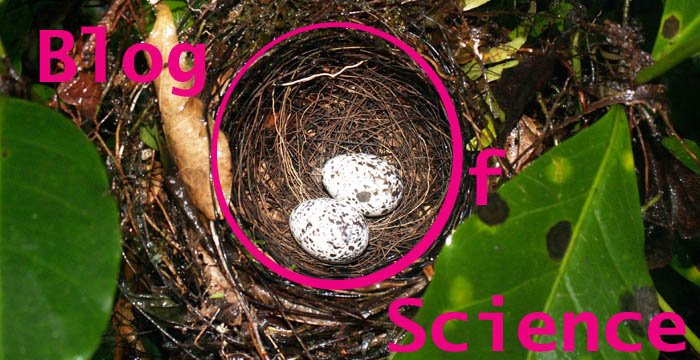
Given this, it may be surprising that the most fully marine descendent of terrestrial vertebrates are not birds. All birds lay eggs, and none have figured out how to make that work at sea, so all need to maintain the ability to be land animals. Almost all mammals give live birth, and three groups (Cetaceans, Sirineans and sea otters) can do that without ever leaving the water. The birds may have an easier time getting started down evolutionary paths that lead to a marine life, but they seem to have an inescapable constraint that keeps them from finishing that path: shelled eggs.
The marine reptiles show an interesting parallel to this. Marine iguanas, saltwater crocs and sea turtles all lay eggs, and all do so on land. Sea snakes, excepting one genus, birth live young, and do so at sea. That one genus lays eggs on land.
If some snakes have evolved the ability to have their eggs hatch internally and their hatchlings ready to swim the moment they emerge from the mother, why can't some bird do the same? Imagine how much better off an emperor penguin would be if instead of spending the Antarctic winter fasting in the cold, it could spend that time feasting in the ocean with it's chick developing internally.
Any answer I could offer would be pure speculation. One class of question that evolutionary biology is very bad at answering is "why didn't X evolve." Why hasn't any bird evolved live birth? Maybe it is something about their egg shells. Maybe they are in a habitat where that just doesn't work. Probably it just never happened.
Showing posts with label speculations. Show all posts
Showing posts with label speculations. Show all posts
Monday, August 01, 2011


Monday, October 18, 2010
Cold Season
"I woke today and found the frost perched on the town
it hovered in a frozen sky, and gobbled summer down."
-Joni Mitchell
Rostock has its first real frost this morning. In anticipation of this event, the first bad cold of the year has been going around. I think about half the Institute has gotten it so far. I have been sick to varying degrees for a week now. Without having actually looked at the relevant research, my understanding is that we get so many more colds when it gets colder because the airborne viruses break down much more slowly when the areas cold and dry and sunlight is weak. I've also heard somewhere that the cold air makes mucous membranes more susceptible to viruses. This all makes sense, and helps explain why that other common airborne virus that spreads every year, the flu, also concentrates in winter, but it leaves me wondering this: is the pattern the same in species that are adapted to highly seasonal climates? Humans are basically a tropical species that construct tropic-like microclimates for ourselves wherever we go. Our ancestors a few thousand generations ago would not have experienced the yearly cold season as we do today. Moose on the other hand have been living in cold climates forever. Their bodies should expect high virus conditions every winter and prepare accordingly. I speculate that the immune systems of such animals are seasonal, being better at fighting airborne viruses in the winter, and perhaps skin fungus is in the summer. I wouldn't personally want to do the experiments to find out, but I would read the paper if somebody else wrote it.
it hovered in a frozen sky, and gobbled summer down."
-Joni Mitchell
Rostock has its first real frost this morning. In anticipation of this event, the first bad cold of the year has been going around. I think about half the Institute has gotten it so far. I have been sick to varying degrees for a week now. Without having actually looked at the relevant research, my understanding is that we get so many more colds when it gets colder because the airborne viruses break down much more slowly when the areas cold and dry and sunlight is weak. I've also heard somewhere that the cold air makes mucous membranes more susceptible to viruses. This all makes sense, and helps explain why that other common airborne virus that spreads every year, the flu, also concentrates in winter, but it leaves me wondering this: is the pattern the same in species that are adapted to highly seasonal climates? Humans are basically a tropical species that construct tropic-like microclimates for ourselves wherever we go. Our ancestors a few thousand generations ago would not have experienced the yearly cold season as we do today. Moose on the other hand have been living in cold climates forever. Their bodies should expect high virus conditions every winter and prepare accordingly. I speculate that the immune systems of such animals are seasonal, being better at fighting airborne viruses in the winter, and perhaps skin fungus is in the summer. I wouldn't personally want to do the experiments to find out, but I would read the paper if somebody else wrote it.
Saturday, February 06, 2010
Cold and Fat
Cold places tend to have fatty cuisines. The usual explanation for this, although I know of no rigorous test, is that cold weather requires us to burn lots of energy to stay warm, and our bodies respond to this greater demand by causing us to eat more rich foods.
This simple idea has several profound implications that I will now proceed to invent.
The first implication is that " burn lots of energy to stay warm" means something very similar to "increase metabolic rate." So people in colder environments should have higher metabolisms. This matches with the current experience of myself and my wife. For the past months the temperature outside our apartment has rarely gotten above freezing, the wind is always blowing and it is generally damp. Our apartment is somewhat difficult to heat, so it is generally cool and sometimes downright cold inside. We have been eating a very rich diet, and rather than gaining weight, I think we are both loosing a bit. And although the short days cause a degree of lethargy, I have been generally quite productive, with fewer problems of concentration than usual.
There is good reason to think, in fact, that colder climates lead to greater productivity. Colder countries are systematically more economically productive than hotter countries, air conditioning raises productivity considerably, and hot countries experience more economic growth in cool years than in warm ones. My preferred speculation is that this is because the experience of coolth induces greater physiological throughput, allowing for greater activity. If one needs to expend energy to keep oneself warm, why not put that energy to some good use, such as thinking, building, or working. Why shiver when I can use the same energy sharpening the knives or generating a hypothesis?
Allow me one further observation and conjecture. Germans, who eat very heavy diets but on the average are less heavy than Americans, are in the habit of opening all the windows whenever it gets warm inside, even if it is below freezing out. Two apparently unrelated stereo-types of modern Americans, both of which have some basis in fact, may in fact be causally related. These are, we are very fat, and we keep our houses very warm in the winter. Perhaps the miracle diet so many have been searching for should include turning down the thermostat. If we burn more calories when we experience cold, and we want to burn more calories, perhaps we should experience more cold.
This simple idea has several profound implications that I will now proceed to invent.
The first implication is that " burn lots of energy to stay warm" means something very similar to "increase metabolic rate." So people in colder environments should have higher metabolisms. This matches with the current experience of myself and my wife. For the past months the temperature outside our apartment has rarely gotten above freezing, the wind is always blowing and it is generally damp. Our apartment is somewhat difficult to heat, so it is generally cool and sometimes downright cold inside. We have been eating a very rich diet, and rather than gaining weight, I think we are both loosing a bit. And although the short days cause a degree of lethargy, I have been generally quite productive, with fewer problems of concentration than usual.
There is good reason to think, in fact, that colder climates lead to greater productivity. Colder countries are systematically more economically productive than hotter countries, air conditioning raises productivity considerably, and hot countries experience more economic growth in cool years than in warm ones. My preferred speculation is that this is because the experience of coolth induces greater physiological throughput, allowing for greater activity. If one needs to expend energy to keep oneself warm, why not put that energy to some good use, such as thinking, building, or working. Why shiver when I can use the same energy sharpening the knives or generating a hypothesis?
Allow me one further observation and conjecture. Germans, who eat very heavy diets but on the average are less heavy than Americans, are in the habit of opening all the windows whenever it gets warm inside, even if it is below freezing out. Two apparently unrelated stereo-types of modern Americans, both of which have some basis in fact, may in fact be causally related. These are, we are very fat, and we keep our houses very warm in the winter. Perhaps the miracle diet so many have been searching for should include turning down the thermostat. If we burn more calories when we experience cold, and we want to burn more calories, perhaps we should experience more cold.
Tuesday, July 07, 2009
H1: The universe is 96% aliens.
Most good scientists are deeply impressed by, and even excited about, how little we yet know, how much there still is to find out. Our science and technology are impressive accomplishments, but still very much in their infancy as compared to what is possible.
Imagine, if you will, a tremendously technologically advanced civilization, whose technology just continues to advance. What is the end point? What do they and their technology look like after billions of years of rapid technological advance? I think it is safe to say that we don't know. It clearly wouldn't be anything that we currently have the science or technology to understand. As Arthur C. Clarke wrote, "Any sufficiently advanced technology is indistinguishable from magic." We wouldn't understand this alien technology or what it did any more than Cro-Magnons would understand a wireless modem. This hyper-advanced civilization would presumably have explored ever nook, cranny and loophole in the physical laws that govern the universe and transformed their technology and themselves beyond recognition. We likely wouldn't even recognize it or them as technology or life. We might not even recognize them or their technology as normal matter or energy, although after billions of years they would likely have transformed large parts of the universe itself.
Which brings me back to how little we currently know. Modern cosmology assigns only 4% of the mass/energy in the universe to "normal" matter, the kind we know anything about. 22% is thought to be "dark matter" and the remainder, 74%, is "dark energy." We know little about dark matter and next to nothing about dark energy, except that they are necessary to make our equations work out. Putting to one side the plausibility that the equations are wrong, we are free to speculate on what is going on with that other 96% that we can't see but suspect is there. My preferred hypothesis is that the universe is 96% aliens. Which is a somewhat silly way of saying that other life-forms may have transformed some large portion of the mass and energy in the universe into forms we don't understand. Why should a civilization with the most advanced technology we can pretend to conceive of be expected to leave things as they found them? If conservation of mass/energy is one of the rules they can't get around, couldn't a big crowded universe of aliens be expected to convert a large portion of its limiting resource into whatever form allows them to use this resource most efficiently? Dark matter releases no detectable radiation, and as such leaks no mass/energy. This would also help to explain why SETI can't detect any aliens. A civilization that hoards mass and energy isn't going to go blaring electromagnetism all over the place.
Why under this hypothesis would 4% of the matter be left as boring old stars, dust, black holes and light? Perhaps these things serve some function for the dark aliens. Or maybe we, and everything we can see, are a designated nature preserve with strictly enforced limits on poaching. To try to answer this last question is to move from pure speculation to pure fancy, so your guess is as good as mine.
Imagine, if you will, a tremendously technologically advanced civilization, whose technology just continues to advance. What is the end point? What do they and their technology look like after billions of years of rapid technological advance? I think it is safe to say that we don't know. It clearly wouldn't be anything that we currently have the science or technology to understand. As Arthur C. Clarke wrote, "Any sufficiently advanced technology is indistinguishable from magic." We wouldn't understand this alien technology or what it did any more than Cro-Magnons would understand a wireless modem. This hyper-advanced civilization would presumably have explored ever nook, cranny and loophole in the physical laws that govern the universe and transformed their technology and themselves beyond recognition. We likely wouldn't even recognize it or them as technology or life. We might not even recognize them or their technology as normal matter or energy, although after billions of years they would likely have transformed large parts of the universe itself.
Which brings me back to how little we currently know. Modern cosmology assigns only 4% of the mass/energy in the universe to "normal" matter, the kind we know anything about. 22% is thought to be "dark matter" and the remainder, 74%, is "dark energy." We know little about dark matter and next to nothing about dark energy, except that they are necessary to make our equations work out. Putting to one side the plausibility that the equations are wrong, we are free to speculate on what is going on with that other 96% that we can't see but suspect is there. My preferred hypothesis is that the universe is 96% aliens. Which is a somewhat silly way of saying that other life-forms may have transformed some large portion of the mass and energy in the universe into forms we don't understand. Why should a civilization with the most advanced technology we can pretend to conceive of be expected to leave things as they found them? If conservation of mass/energy is one of the rules they can't get around, couldn't a big crowded universe of aliens be expected to convert a large portion of its limiting resource into whatever form allows them to use this resource most efficiently? Dark matter releases no detectable radiation, and as such leaks no mass/energy. This would also help to explain why SETI can't detect any aliens. A civilization that hoards mass and energy isn't going to go blaring electromagnetism all over the place.
Why under this hypothesis would 4% of the matter be left as boring old stars, dust, black holes and light? Perhaps these things serve some function for the dark aliens. Or maybe we, and everything we can see, are a designated nature preserve with strictly enforced limits on poaching. To try to answer this last question is to move from pure speculation to pure fancy, so your guess is as good as mine.
Thursday, January 01, 2009
Evolution in the Great Pacific Garbage Patch
Put some sand grains in a round bowl of water, then twirl the water neatly, so that the water rotates cleanly around the inside of the bowl. You will observe most of the sand settle out of the water in the center of the bowl. Do the same thing with tiny bits of floating plastic, and you will get the same result. Now do the same thing to the Pacific Ocean with all the floating trash we throw into it, and you get the Great Pacific Garbage Patch. A large portion of the North Pacific naturally rotates in a current called the North Pacific Gyre. Take a boat to the center of rotation, and you will find enourous quantities of floating junk, especially plastic. Wave action and UV gradually break this plastic down into microscopic bits, which become part of the local ecosystem along with the water, plankton, fish and so forth. But nothing eats plastic, right?
This is where my current pondering comes in. Imagine that one of the hundreds of billions, maybe trillions, of plankton in the Great Pacific Garbage Patch had a mutation that allowed it to gain some slight advantage from plastic. It would surely find some tiny scrap of plastic, and would have a slight advantage over its competitors. If that helps it reproduce successfully, and its offspring carry that same mutation, then we have more plankton who gain a competative advantage from plastic. At the rates plankton reproduce, it is not long before the GPGP is full of plankton who can make some use of plastic. Now suppose another mutation in one of those plastic-loving plankton makes it even better at using plastic. Able to slowly digest some component of it or incorporate it into its protective covering. The larger plankton that eat those little plankton will also have to evolve to deal with plastic. Sooner or later, in the crazy fast generations of open ocean plankton, someone is going to start evolving down a path that leads to the ability to digest plastic. And when that happens, when the plastic in the North Pacific Gyre starts myseriously disapearing, don't expect the little plastic eaters to stay there. There are far to many ecosystems with far to much plastic available for plasticovores to be contained. Plastic is, after all, an organic substance with a high energy content. Sure it isn't biodegrable. Not yet.
This is where my current pondering comes in. Imagine that one of the hundreds of billions, maybe trillions, of plankton in the Great Pacific Garbage Patch had a mutation that allowed it to gain some slight advantage from plastic. It would surely find some tiny scrap of plastic, and would have a slight advantage over its competitors. If that helps it reproduce successfully, and its offspring carry that same mutation, then we have more plankton who gain a competative advantage from plastic. At the rates plankton reproduce, it is not long before the GPGP is full of plankton who can make some use of plastic. Now suppose another mutation in one of those plastic-loving plankton makes it even better at using plastic. Able to slowly digest some component of it or incorporate it into its protective covering. The larger plankton that eat those little plankton will also have to evolve to deal with plastic. Sooner or later, in the crazy fast generations of open ocean plankton, someone is going to start evolving down a path that leads to the ability to digest plastic. And when that happens, when the plastic in the North Pacific Gyre starts myseriously disapearing, don't expect the little plastic eaters to stay there. There are far to many ecosystems with far to much plastic available for plasticovores to be contained. Plastic is, after all, an organic substance with a high energy content. Sure it isn't biodegrable. Not yet.
Thursday, November 20, 2008
Intersexual Correlation
A colleague wrote to ask me what I thought about an idea he'd had. He was thinking about the fact that one could have two individuals with the same genotypes, except for those genes determining sex (which is some species don't exist, where sex is environmentally determined), and end up with significantly different phenotypes. In some traits (e.g. Hair color) these two individuals would be expected to have very similar traits, in others (e.g. genital morphology) they would be expected to be very different, and perhaps in some cases uncorrelated or negatively correlated. He wondered if this might affect the ability of individuals to choose mates who would produce highly successful offspring. For instance, a female sizing up a male would have a better sense of what that male's sons would look like than what his daughters would look like. A big very masculine male might tend to have oversized and somewhat unattractive daughters. My colleage wondered if this might confuse things enough to slow down the action of sexual selection, and allow a greater genetic diversity to remain in the population than would otherwise be the case. I found htis a very interesting question, and wrote the following reply:
There is a body of literature on the degree to which natural selection on the traits of one sex will affect the traits of the other sex. People often use the term "correlated evolution" to describe this sort of thing. When there is a correlation (positive or negative) in a trait between the female expressed genotype and the male expressed genotype, I've seen the phrase "intersexual correlation." I am not terribly familiar with this literature, I'm afraid.
This recent paper is the closest thing I know of to what you are talking about.
Whether any of this would lead to a greater genetic diversity in the population, I am not sure. The effects of natural selection may be somewhat weaker, as traits that are expressed in one sex but not the other are less often expressed, and therefore less often subject to selection (an epistatic interaction in effect). In the case of sexual selection, my guess would be that as long as degrees of intersexual correlation in particular traits evolve more slowly than do what cues individuals use to choose mates, choosers should evolve to focus on characteristics that are good indicators of fitness in both male and female offspring. I think this will generally be the case, as there is clearly very strong selection against those who use misleading cues in mate choice. I am not aware of any reason to think there would be rapid change in the degree of intersexual correlation in a wide range of traits all at once. As long as there is any consistently reliable signal available, the family lines that use it should tend to do better than the population average.
It raises an interesting set of questions, I am not sure how many of them there is any literature on.
Does this answer your question? If you want more expert answers we could ask Monty Slatkin, who I am sure has thought about this in some detail at some point.
There is a body of literature on the degree to which natural selection on the traits of one sex will affect the traits of the other sex. People often use the term "correlated evolution" to describe this sort of thing. When there is a correlation (positive or negative) in a trait between the female expressed genotype and the male expressed genotype, I've seen the phrase "intersexual correlation." I am not terribly familiar with this literature, I'm afraid.
This recent paper is the closest thing I know of to what you are talking about.
Whether any of this would lead to a greater genetic diversity in the population, I am not sure. The effects of natural selection may be somewhat weaker, as traits that are expressed in one sex but not the other are less often expressed, and therefore less often subject to selection (an epistatic interaction in effect). In the case of sexual selection, my guess would be that as long as degrees of intersexual correlation in particular traits evolve more slowly than do what cues individuals use to choose mates, choosers should evolve to focus on characteristics that are good indicators of fitness in both male and female offspring. I think this will generally be the case, as there is clearly very strong selection against those who use misleading cues in mate choice. I am not aware of any reason to think there would be rapid change in the degree of intersexual correlation in a wide range of traits all at once. As long as there is any consistently reliable signal available, the family lines that use it should tend to do better than the population average.
It raises an interesting set of questions, I am not sure how many of them there is any literature on.
Does this answer your question? If you want more expert answers we could ask Monty Slatkin, who I am sure has thought about this in some detail at some point.
Subscribe to:
Posts (Atom)
