Showing posts with label reproduction. Show all posts
Showing posts with label reproduction. Show all posts
Wednesday, March 19, 2014
Apozygotic agamospermic apomictic agamospory
I'm making a table. Not the tisch, bord, tavolo, mensa kind. I'm making a table of comparisons of offspring viability between sexually and asexually produced offspring. This is polychallenging. Part of it is that the literature is scattered, so it takes a lot of hunting around, but that is a usual and interesting sort of challenge. Part of it is that I want to include lots of different kinds of organisms, and find basically comparable comparisons for each, and the measure one might use for offspring viability for a lizard is necessarily different than that used for an insect, plant or mold, but this is arises from the real diversity of biological process, and so is also interesting. The part that I am finding frustrating and difficult is the choking miasma of obfuscatory terminology. Some terms, like amictic, are used to mean different things by different authors. Clear concepts (e.g., what portion of seeds open and something live comes out) are referred to by a dozen different terms. Frequently a single author or group of authors will have a term that does not seem to be defined anywhere and isn't used by anyone else. Apozygotic, for example, seems to be used only by eastern European sugar beet scientists to mean agamospermic, which is a term botanists use to describe reproduction via diplospory, apospory or nucellar embryony, which are all (I think) non-automictic kinds of agamospory, which is close to what a zoologist would call apomictic parthenogenesis, which basically means that offspring are coming out of eggs (or seeds or spores) produced without any genetic recombination or changes in chromosome number along the way. There are various places in the literature or on the web where good intentions have tried to straighten all of this out and discard the duplicate or ambiguous terms, but of course they come to different conclusions and are frequently ignored.


Friday, June 22, 2012
See no seagull
One advantage to living in the tallest building in town is that we
can see who's sneaking around on the roofs of other buildings. That is
in fact part of why our building was built so tall. Back when this was
the German Democratic Republic (East Germany), this building was
occupied mostly by the Stasi (secret police) whose job
it was to keep an eye on everyone all the time and their families.
The building next to ours was the Stasi office building for the state. It has not only been taken over for university use, but there are Herring Gulls nesting on its roof. I spotted two big chicks wandering around yesterday. It is a great place for nesting: high up, with a rim so the chicks won't jump out, and fitted with the finest 1970's surveillance equipment. The roof is even roughly chick-colored, which is probably why until now I have seen no seagull.


The building next to ours was the Stasi office building for the state. It has not only been taken over for university use, but there are Herring Gulls nesting on its roof. I spotted two big chicks wandering around yesterday. It is a great place for nesting: high up, with a rim so the chicks won't jump out, and fitted with the finest 1970's surveillance equipment. The roof is even roughly chick-colored, which is probably why until now I have seen no seagull.


Thursday, April 19, 2012
Egg-maculate conception
I've long said that if I was a benevolent deity the first thing I would do was give penguins the ability to produce live offspring at sea, the way whales and otters do. My opinion has been that all birds lay eggs that need to be kept warm and be exposed to air, and no bird can give live birth, and therefore it would require the intercession of a god to produce a bird that could develop its eggs either internally or under (cold) water.
Well, that may still be true, but consider the following from the BBC today:
Now before all you penguins trade in your carefully maintained rock scrapes and hole-nests for shrines to the fertility god, keep in mind the following:
1. The mother died, probably quite painfully, and therefore is not around to feed the chick.
2. It would be hard for a trait like that to spread through a population, as each mother could produce only one offspring, and sexually reproducing mothers need to produce at least two adult offspring to reach replacement.
3. It probably isn't true anyway.
Still, it is an interesting story. If a group of birds could for some other reason first evolve to have un-calcified eggs, then it seems more likely that live birth would have a chance of evolving.
Well, that may still be true, but consider the following from the BBC today:
Let's assume for a moment that this is true, and neither a prank nor a misunderstanding. What seems to have happened is that the egg was retained inside the mother's reproductive tract. This (technically called dystocia) happens occasionally, especially to older hens. The egg just gets stuck, and usually eventually breaks and comes out in pieces, which can often kill the mother, and which also smells terrible, as the egg is usually quite rotten. But in this case it appears that the retained egg developed successfully, and the mother wasn't killed until the chick was viable. So assuming this is true, it is the first example of live birth in a bird I can find.'Eggless' chick laid by hen in Sri Lanka
Instead of passing out of the hen's body and being incubated outside, the egg was incubated in the hen for 21 days and then hatched inside the hen.
The chick is fully formed and healthy, although the mother has died.
Now before all you penguins trade in your carefully maintained rock scrapes and hole-nests for shrines to the fertility god, keep in mind the following:
1. The mother died, probably quite painfully, and therefore is not around to feed the chick.
2. It would be hard for a trait like that to spread through a population, as each mother could produce only one offspring, and sexually reproducing mothers need to produce at least two adult offspring to reach replacement.
3. It probably isn't true anyway.
Still, it is an interesting story. If a group of birds could for some other reason first evolve to have un-calcified eggs, then it seems more likely that live birth would have a chance of evolving.
Saturday, August 27, 2011
Writing while sleep deprived
I am about to submit another big funding application. This one has been a lot more work than the previous applications, as the required research statement, the largest of several sections, is 25 pages. I can't really complain. If I was going to give someone enough money to run a research group for five years, I too would want to know in some detail what they would do with the money. Further, sitting down and trying to put my plans into a single document makes me systematically consider how my various plans fit together, always a useful exercise. My only complaint really is that I should have done much more on this long before my daughter was born. It is hard to care too much about the details of the application while fighting to stay awake and get the baby to sleep.
Friday, June 24, 2011
33 weeks LMP
There is a certain irony to being to a researcher who studies mortality risk early in life, and also a soon-to-be father. Sometimes I feel I know way too much about certain topics.
Monday, May 30, 2011
Reproduction



Thursday, January 27, 2011
Hydra bud

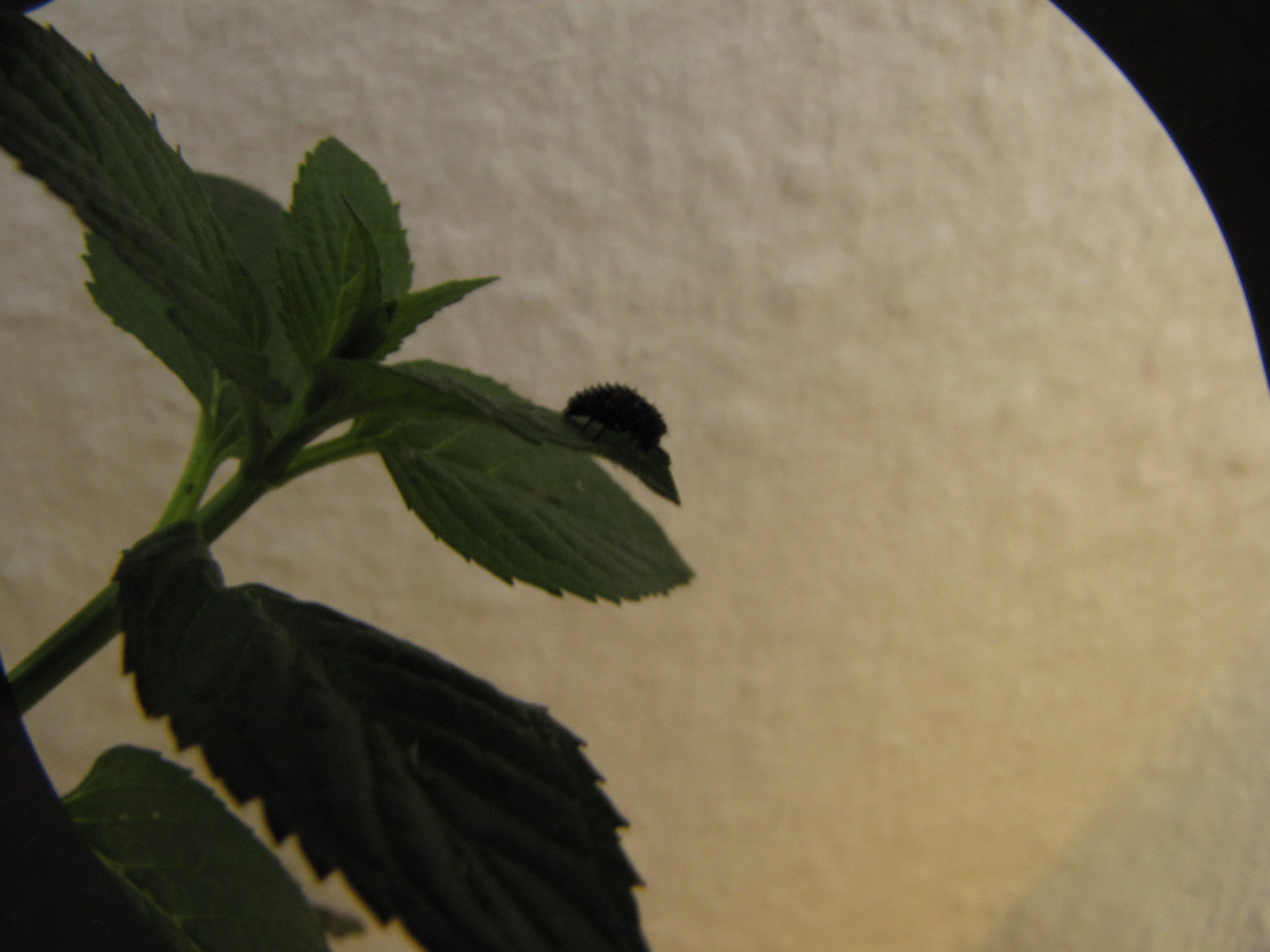
To reproduce asexually, hydra bud. A bump grows on the lower stem of the adult, elongates, grows tenticles, develops a seperated body cavity, and finally releases from the mother to be a perfect little clone. This particular bud needs another few days of growing before it can detach, but its tenticles are already armed with poison stingers, and it can catch prey, or eat plankton passed to it by the tenticles of the mother. I've only seen this food-passing a couple of time, and it could even be coincidental, but it is nice to think that even cnidarians get tasty treats from their mommies.
Friday, April 18, 2008
Dying for Sex
One of the projects I am working on currently is an analysis, using data from primates, of what life history factors are correlated with sex-biased longevity. To put that plainly, I want to know why in some species the females live longer, in some the males live longer, and in some they live equally long. One of the dozens of hypotheses out there explaining why females live longer, in species where they do, is the 'risky male behavior' hypothesis' which says that males don't live as long because they take risks while out looking for sexual partners.
There has been limited support for this hypothesis, and most of the others, because so many hypotheses make the same predictions that one can rarely conclude that a particular factor is at play unless one ignores all the other possibilities (which seems to be the standard practice.)
This paper from Proc.Roy.Soc.B. takes an interesting new tack, looking not at whether males that are shorter lived than their mates are taking more risks, but rather at whether their short-livedness can be explained by increased mortality during the season of risk taking.
Here is the abstract:
There has been limited support for this hypothesis, and most of the others, because so many hypotheses make the same predictions that one can rarely conclude that a particular factor is at play unless one ignores all the other possibilities (which seems to be the standard practice.)
This paper from Proc.Roy.Soc.B. takes an interesting new tack, looking not at whether males that are shorter lived than their mates are taking more risks, but rather at whether their short-livedness can be explained by increased mortality during the season of risk taking.
Here is the abstract:
Abstract
Male excess mortality is widespread among mammals and frequently interpreted as a cost of sexually selected traits that enhance male reproductive success. Sex differences in the propensity to engage in risky behaviours are often invoked to explain the sex gap in survival. Here, we aim to isolate and quantify the survival consequences of two potentially risky male behavioural strategies in a small sexually monomorphic primate, the grey mouse lemur Microcebus murinus: (i) most females hibernate during a large part of the austral winter, whereas most males remain active and (ii) during the brief annual mating season males roam widely in search of receptive females. Using a 10-year capture–mark–recapture dataset from a population of M. murinus in Kirindy Forest, western Madagascar, we statistically modelled sex-specific seasonal survival probabilities. Surprisingly, we did not find any evidence for direct survival benefits of hibernation—winter survival did not differ between males and females. By contrast, during the breeding season males survived less well than females (sex gap: 16%). Consistent with the ‘risky male behaviour’ hypothesis, the period for lowered male survival was restricted to the short mating season. Thus, sex differences in survival in a promiscuous mammal can be substantial even in the absence of sexual dimorphism.
Tuesday, April 08, 2008
Muller's rachet be damed!
Mutation, and the ability to repair it, are incredibly important drivers of evolution on just about every level.
Bdelloids apparently are degenerate tetraploids, meaning instead of two copies of each chromosome, at some point in their evolutionary past they had four, but those four then diverged somewhat into two pairs. Still, this means they have four copies, on separate chromosomes, of most of their genes. And it appears they can use these four copies as templates to repair each other. If one copy might have a mutation, check it against the other three, find the differences and correct them.
The utility of of this system in the short term (on the time scale that natural selection functions) is demonstrated by two other super-powers of bdelloids. First, they can dry out completely, at any life stage, and when rehydrated will repair all the damage to their chromosomes and resume life where they left it. Second, they can continue reproducing at radiation levels five times higher than what most anything else can stand, because every time the radiation damages their DNA, they just fix it. Bdelloids don't need to worry about cancer, apparently.
So with all these advantages, why haven't bdelloids taken over the world? Why doesn't everything do the bdelloid? Presumably because there are disadvantages in other contexts. Bdelloidism removes mutations so effectively, it seems unlikely very much macro-evolution could take place. After all, the repair mechanisms remove pretty much all mutations, and have no way of knowing if that particular mutation would have been advantageous. Once a bdelloid, always a bdelloid. Bdelloids might also be slow on the micro-evolution side of things. If selective pressures shift, having genetic variation is essential to any sort of adaptive response. Mutations are the ultimate source of genetic variation, so if they are all repaired out of existence, it may be hard to adapt. Finally, I would guess (not knowing the details of the repair mechanism) it is physiologically expensive to do all that checking and repairing all the time.
Now I find myself wondering about the demography of bdelloids. Hmmmm.
Friday, March 28, 2008
Human Oestrus
Iris and I are reading Jared Diamond's book on the evolution of human sexuality, "Why is sex fun?" An interesting read, and in many ways a good introduction to the science of behavioral ecology, except that Diamond falls into his usual habit of making the same point many times and many ways, as if to beat you into agreeing with him. Since I generally start out agreeing with him, this gets tiring. The chapter we were reading last night was primarily his speculations on the evolutionary basis of the lack of obvious oestrus in humans. I was therefore very interested when this evening, browsing the table of contents of ProcRoySoc B, I cam across an article titled "Human Oestrus"
Here is the abstract:
For several decades, scholars of human sexuality have almost uniformly assumed that women evolutionarily lost oestrus—a phase of female sexuality occurring near ovulation and distinct from other phases of the ovarian cycle in terms of female sexual motivations and attractivity. In fact, we argue, this long-standing assumption is wrong. We review evidence that women's fertile-phase sexuality differs in a variety of ways from their sexuality during infertile phases of their cycles. In particular, when fertile in their cycles, women are particularly sexually attracted to a variety of features that likely are (or, ancestrally, were) indicators of genetic quality. As women's fertile-phase sexuality shares with other vertebrate females' fertile-phase sexuality a variety of functional and physiological features, we propose that the term oestrus appropriately applies to this phase in women. We discuss the function of women's non-fertile or extended sexuality and, based on empirical findings, suggest ways that fertile-phase sexuality in women has been shaped to partly function in the context of extra-pair mating. Men are particularly attracted to some features of fertile-phase women, but probably based on by-products of physiological changes males have been selected to detect, not because women signal their cycle-based fertility status.
Here is the abstract:
For several decades, scholars of human sexuality have almost uniformly assumed that women evolutionarily lost oestrus—a phase of female sexuality occurring near ovulation and distinct from other phases of the ovarian cycle in terms of female sexual motivations and attractivity. In fact, we argue, this long-standing assumption is wrong. We review evidence that women's fertile-phase sexuality differs in a variety of ways from their sexuality during infertile phases of their cycles. In particular, when fertile in their cycles, women are particularly sexually attracted to a variety of features that likely are (or, ancestrally, were) indicators of genetic quality. As women's fertile-phase sexuality shares with other vertebrate females' fertile-phase sexuality a variety of functional and physiological features, we propose that the term oestrus appropriately applies to this phase in women. We discuss the function of women's non-fertile or extended sexuality and, based on empirical findings, suggest ways that fertile-phase sexuality in women has been shaped to partly function in the context of extra-pair mating. Men are particularly attracted to some features of fertile-phase women, but probably based on by-products of physiological changes males have been selected to detect, not because women signal their cycle-based fertility status.
Thursday, March 20, 2008
Residual life
Most of us take for granted that we will live for a long time after we stop having kids (for those of us who will have kids). The standard picture for Americans these days is to stop at 40 or so, hope to live to twice that age. And this doesn't seem unrealistic. But when viewed evolutionarily, it seems a bit bizarre. Most organisms do not have a post-reproductive lifespan, human females very clearly do. I've previously written about the most common hypothesis to explain this fact, is the "Grandmother Hypothesis."
On Tuesday I was giving a talk on my research to Berkeley's Primate Research Group, including my experimental examination of the Grandmother Hypothesis. After the talk, I got a lot of good feedback, including an interesting question. How certain are we that females of other species of primates wouldn't live as long post-menopause as humans if they lived as cushy lives as we do?
The only answer I could give them is that I haven't seen any data suggesting otherwise. But then, on my way home, it occurred to me that I already have probably the world's best data set for answering exactly that question.
Primates in well run zoos tend to greatly outlive their wild cousins. Medical care, reliable food supplies, no predators and few pathogens. Not to say the life of a captive primate is perfect, or that there isn't significant variation in the quality of care, but for many species maximum longevity in captivity is much greater than in the wild. And it just so happens that I have life tables, including age specific reproductive rates and mortality rates, for 120 species of primates. These come from ISIS data, meaning data from relatively well run zoos, and I will need permission from ISIS to use them in this way, but I doubt they will have any major objections.
The idea of writing a paper based on data I already have is exciting to me. Usually I spend years between having an idea and having assembled the data to address it. I have almost all the data I need to address this question safely on several computers. I'll get the hang of this science thing yet.
On Tuesday I was giving a talk on my research to Berkeley's Primate Research Group, including my experimental examination of the Grandmother Hypothesis. After the talk, I got a lot of good feedback, including an interesting question. How certain are we that females of other species of primates wouldn't live as long post-menopause as humans if they lived as cushy lives as we do?
The only answer I could give them is that I haven't seen any data suggesting otherwise. But then, on my way home, it occurred to me that I already have probably the world's best data set for answering exactly that question.
Primates in well run zoos tend to greatly outlive their wild cousins. Medical care, reliable food supplies, no predators and few pathogens. Not to say the life of a captive primate is perfect, or that there isn't significant variation in the quality of care, but for many species maximum longevity in captivity is much greater than in the wild. And it just so happens that I have life tables, including age specific reproductive rates and mortality rates, for 120 species of primates. These come from ISIS data, meaning data from relatively well run zoos, and I will need permission from ISIS to use them in this way, but I doubt they will have any major objections.
The idea of writing a paper based on data I already have is exciting to me. Usually I spend years between having an idea and having assembled the data to address it. I have almost all the data I need to address this question safely on several computers. I'll get the hang of this science thing yet.
Monday, March 17, 2008
Rotifers, sex and locomotion: fast males, slow females
A while back I saw a male rotifer and for the first time knew that it was a male rotifer I was seeing. Three things immediately struck me:
1. Oh! so that's what I've been seeing all this time.
2. Damn they're so tiny compared to the females
3. Golly-gee-willackers they move fast.
To give you a sense of this, observe the following Youtube video I came across. The little bizarrely fast ones are the males.
The males are short-lived, have no digestive system or foot (meaning they can't eat or anchor in one place). They hatch from an unfertilized egg, carry their mothers' genes to other females, and die.
I was discussing this with a friend of mine, who asked, "what good are the males anyway?"
"They're just swimming sperm packets." I replied. But then I thought about it more, and realized the question could be viewed another way. There are plenty of invertebrates that are hermaphroditic. A single individual has both ovaries and testes. I fertelize you while you fertilize me. No need to build a whole separate individual to deliver the sperm. So why go to all the expense of pumping out fleets of males?
Maybe, I thought, it was that speed. The smaller a rotifer is, the faster it can swim. This is the result of the fluid dynamics of how they swim. I don't know a thing about fluid dynamics, so I won't try to explain that, but the data show that swimming speed is predicted with great accuracy by size.
Having fast moving sperm deliverers could have two benefits that immediately occur to me. First, one can spread one's genes much further by producing small, fast males and sending them off in all directions, than by having one big slow female swim around. Especially considering that the female's immediate neighbors have a good chance of being clones of herself, to make sexual reproduction worthwhile, she needs to get get her sperm far away. That may require speed.
Second, maybe being fast is useful in the competition for mating. If the females are not just willing to mate with every rotifer that wanders along, perhaps being fast increases the chance of fertilizing her eggs.
These are all just hypotheses, but they are testable ones, and perhaps some day I will get to testing them.
1. Oh! so that's what I've been seeing all this time.
2. Damn they're so tiny compared to the females
3. Golly-gee-willackers they move fast.
To give you a sense of this, observe the following Youtube video I came across. The little bizarrely fast ones are the males.
The males are short-lived, have no digestive system or foot (meaning they can't eat or anchor in one place). They hatch from an unfertilized egg, carry their mothers' genes to other females, and die.
I was discussing this with a friend of mine, who asked, "what good are the males anyway?"
"They're just swimming sperm packets." I replied. But then I thought about it more, and realized the question could be viewed another way. There are plenty of invertebrates that are hermaphroditic. A single individual has both ovaries and testes. I fertelize you while you fertilize me. No need to build a whole separate individual to deliver the sperm. So why go to all the expense of pumping out fleets of males?
Maybe, I thought, it was that speed. The smaller a rotifer is, the faster it can swim. This is the result of the fluid dynamics of how they swim. I don't know a thing about fluid dynamics, so I won't try to explain that, but the data show that swimming speed is predicted with great accuracy by size.
Having fast moving sperm deliverers could have two benefits that immediately occur to me. First, one can spread one's genes much further by producing small, fast males and sending them off in all directions, than by having one big slow female swim around. Especially considering that the female's immediate neighbors have a good chance of being clones of herself, to make sexual reproduction worthwhile, she needs to get get her sperm far away. That may require speed.
Second, maybe being fast is useful in the competition for mating. If the females are not just willing to mate with every rotifer that wanders along, perhaps being fast increases the chance of fertilizing her eggs.
These are all just hypotheses, but they are testable ones, and perhaps some day I will get to testing them.
Friday, February 29, 2008
phylogenetic inertia and cooperative breeding
I spent yesterday evening reading the literature on the extent to which there is phylogenetic inertia (the tendency for related species to have similar traits because they both inherited those traits from the common ancestral population) in cooperative breeding (the habit of having more than two individuals caring for the young).
My general conclusions are:
1. A species whose relatives are cooperative breeders are often cooperative breeders themselves.
2. It is not entirely clear if cooperative breeding itself is phylogenetically conserved in many groups, or if the traits that make it a useful strategy are conserved, leading to the impression of inertia in the evolution of cooperative breeding.
3. Phylogenetists spend a lot of time and ink poodling on about the flaws in each other's methods, but always end by saying that the conclusion about the trait is probably robust to minor variations in the shape of the tree.
4. Cooperative breeding is a blanket term for several different phenomena, and papers that deal with this explicitly are more convincing than those that only pay it lipservice.
5. The data I am already putting together on who provides how much care in 120 primate species could probably also be used for a very useful paper on phylogenetic inertia in cooperative breeding.
My general conclusions are:
1. A species whose relatives are cooperative breeders are often cooperative breeders themselves.
2. It is not entirely clear if cooperative breeding itself is phylogenetically conserved in many groups, or if the traits that make it a useful strategy are conserved, leading to the impression of inertia in the evolution of cooperative breeding.
3. Phylogenetists spend a lot of time and ink poodling on about the flaws in each other's methods, but always end by saying that the conclusion about the trait is probably robust to minor variations in the shape of the tree.
4. Cooperative breeding is a blanket term for several different phenomena, and papers that deal with this explicitly are more convincing than those that only pay it lipservice.
5. The data I am already putting together on who provides how much care in 120 primate species could probably also be used for a very useful paper on phylogenetic inertia in cooperative breeding.
Sunday, February 17, 2008
Why no "grandfather effect"?
Much of my time at present is consumed by setting up an experimental test of what is known as the grandmother hypothesis. The grandmother hypothesis, in short, is the best guess we have as to why the females of humans and a few other species can live well past the age of reproductive cessation. In most species, and indeed in human males, there is no significant post-reproductive lifespan. Individuals are physiologically capable of reproducing for as long as they live. But the females of humans, a few other primates, a couple of cetations and maybe elephants go through menopause and then can live a significant portion of their lifespan after that. Our closest relatives, the chimps and bonobos, apparently go through menopause at the same age as our females, but live at most a few years after that.
Evolutionarily, this makes sense. If one is no longer increasing one's lifetime reproductive success, staying alive offers no obvious selective advantage. No point in investing in physiologies and structures that will last 100 years if one is only going to reproduce for 50 years. Better to put those resources into having more kids now.
But under a certain set of circumstances, reproduction does not end with, or shortly after, childbirth. If your young aren't really able to take care of themselves for a decade or two, you aren't done reproducing until they don't need you any more. In most hunter gatherer societies, the survival rate of five year olds whose mothers die is quite low. So for human women, having a kid in the last several years of life was likely a waste of time.
Worse, the kid who didn't make it took time and resources that could have been put into other kids, and childbirth, particularly late in life, is dangerous. Plus, elder human females are important for helping their daughters raise their own young, and learn how to do so. It has been shown that young mothers in several societies have a higher success rate raising kids if their mothers are around. The women who stopped having kids and focussed on the kids and grandkids they already had, and avoided the risk of late life childbirth, are thought to have ended up getting more of their genes into future generations than women who kept giving birth as long as they lived. If so, and if this variation in life history was heritable, which seems likely, this differential reproductive success would inevitably lead to a population with more and more women stopping early and fewer and fewer giving birth late in life. This is, we think, why we ended up with this "grandmother effect" of women living well past reproductive age.
The benefit of having a grandmother around seems to be restricted to maternal grandmothers. And this observation, that paternal grandmothers don't seem to make as much of a difference (at least in the societies studied) to the survival of their grandkids, points to at least two possible reasons why we don't see a "grandfather effect" to go along with this "grandmother effect."
First, in most societies, at least those studied in this context, males are providing less in the way of vital care. So if a women has a son who has kids, perhaps she is less involved in care, or in teaching how to care, because her son is not as involved as his mate in that care, and the daughter-in-law is not nearly as likely to look for advice and help from her husband's mother than her own mother. And perhaps this same logic applies to grandfathers on both sides. If they are not who the primary caregiver can go to for help and advice, the advantage of having them around to help is smaller.
Second, paternal grandmothers are less certain of which is really their genetic grandchild. If a woman gives birth to a daughter, and watches that daughter give birth to babies, she can be very confident that those are her descendants. If a woman gives birth to a son, and then watches that husband's mate give birth, there is a significant chance (and we have the genetic data to substantiate this) that the baby was fathered by some other man, and those babies aren't her genetic kin. So investing in them heavily may not be doing her any good. This argument is doubly true for grandfathers. The daughter who is giving birth may not even be his. A couple of generations removed, and who can be sure?
A final reason males may not have evolved to have a post reproductive period comes back to that risk in late life childbirth. Men don't give birth, so the risk to late life survival posed by late life reproduction may be greatly reduced, or completely absent. Without that trade-off, why not keep on breeding as long as possible?
Evolutionarily, this makes sense. If one is no longer increasing one's lifetime reproductive success, staying alive offers no obvious selective advantage. No point in investing in physiologies and structures that will last 100 years if one is only going to reproduce for 50 years. Better to put those resources into having more kids now.
But under a certain set of circumstances, reproduction does not end with, or shortly after, childbirth. If your young aren't really able to take care of themselves for a decade or two, you aren't done reproducing until they don't need you any more. In most hunter gatherer societies, the survival rate of five year olds whose mothers die is quite low. So for human women, having a kid in the last several years of life was likely a waste of time.
Worse, the kid who didn't make it took time and resources that could have been put into other kids, and childbirth, particularly late in life, is dangerous. Plus, elder human females are important for helping their daughters raise their own young, and learn how to do so. It has been shown that young mothers in several societies have a higher success rate raising kids if their mothers are around. The women who stopped having kids and focussed on the kids and grandkids they already had, and avoided the risk of late life childbirth, are thought to have ended up getting more of their genes into future generations than women who kept giving birth as long as they lived. If so, and if this variation in life history was heritable, which seems likely, this differential reproductive success would inevitably lead to a population with more and more women stopping early and fewer and fewer giving birth late in life. This is, we think, why we ended up with this "grandmother effect" of women living well past reproductive age.
The benefit of having a grandmother around seems to be restricted to maternal grandmothers. And this observation, that paternal grandmothers don't seem to make as much of a difference (at least in the societies studied) to the survival of their grandkids, points to at least two possible reasons why we don't see a "grandfather effect" to go along with this "grandmother effect."
First, in most societies, at least those studied in this context, males are providing less in the way of vital care. So if a women has a son who has kids, perhaps she is less involved in care, or in teaching how to care, because her son is not as involved as his mate in that care, and the daughter-in-law is not nearly as likely to look for advice and help from her husband's mother than her own mother. And perhaps this same logic applies to grandfathers on both sides. If they are not who the primary caregiver can go to for help and advice, the advantage of having them around to help is smaller.
Second, paternal grandmothers are less certain of which is really their genetic grandchild. If a woman gives birth to a daughter, and watches that daughter give birth to babies, she can be very confident that those are her descendants. If a woman gives birth to a son, and then watches that husband's mate give birth, there is a significant chance (and we have the genetic data to substantiate this) that the baby was fathered by some other man, and those babies aren't her genetic kin. So investing in them heavily may not be doing her any good. This argument is doubly true for grandfathers. The daughter who is giving birth may not even be his. A couple of generations removed, and who can be sure?
A final reason males may not have evolved to have a post reproductive period comes back to that risk in late life childbirth. Men don't give birth, so the risk to late life survival posed by late life reproduction may be greatly reduced, or completely absent. Without that trade-off, why not keep on breeding as long as possible?
Thursday, October 11, 2007
Summary of reproductive biology, as conveyed by my four year old neighbor:
1. "I was in my mommy's belly"
2. "You was in your mommy's belly."
3. "Everything was in mommy's belly."
4. "Except fish. They don't do it."
5. "Then you crawl, crawl crawl down to, um, butt? Come out!"
6. "That cool, right?"
2. "You was in your mommy's belly."
3. "Everything was in mommy's belly."
4. "Except fish. They don't do it."
5. "Then you crawl, crawl crawl down to, um, butt? Come out!"
6. "That cool, right?"
Subscribe to:
Posts (Atom)

