Monday, May 30, 2011

Reproduction

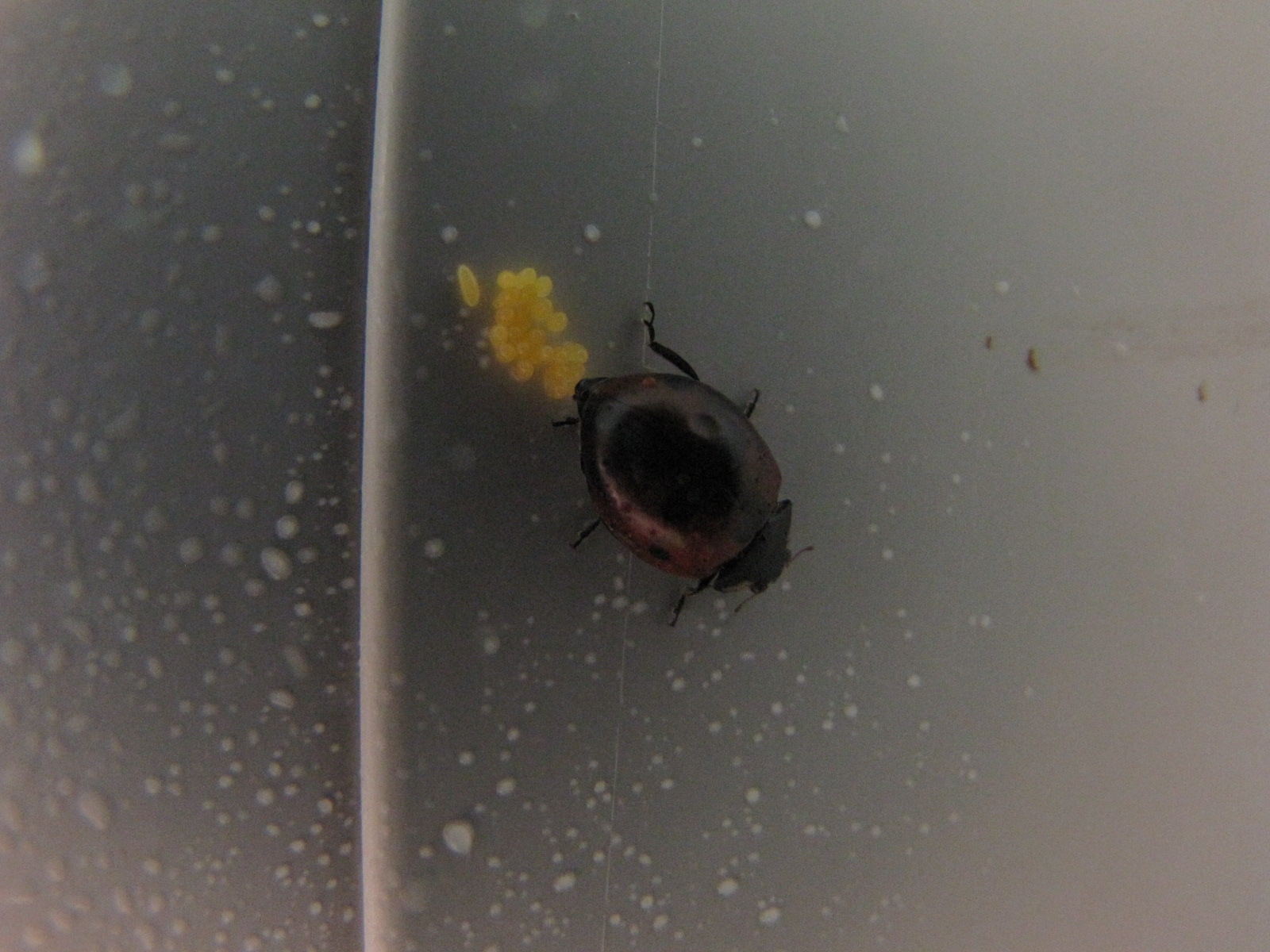
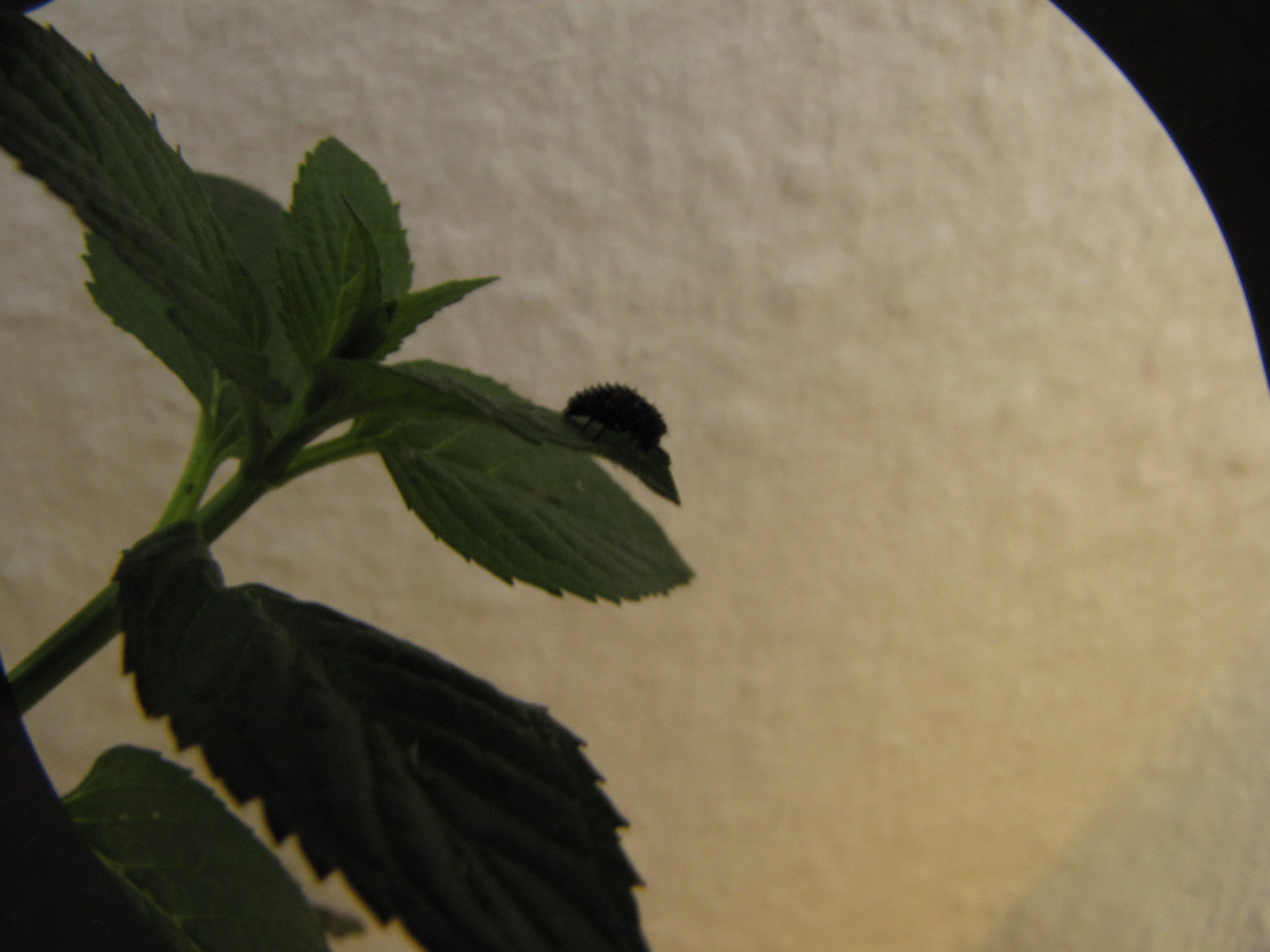
The ladybugs are successfully reproducing on our mint plant. Oh frabjous day! The larvae are crawling all over the plant scarfing down aphids like mad, and the adults are laying more eggs. It is exciting to see them doing so well.


Friday, May 20, 2011

Two offers out

We have now interviewed two post-doc applicants. Both are extremely well qualified for their respective prospective positions. Both seem very easy to get along with, and both have been offered the positions. Neither, unfortunately, has yet accepted. The first because she is scheduled for a competing interview today, the other because she needs to make sure her partner can also get a job in Rostock. If we hire both of them, I will have a wonderful research team. With either one we could make real progress.

We still have one more candidate coming, next week, and if my bosses like him we could offer a position to him also. If we end up successfully hiring all three, I will be very happy.

Thursday, May 19, 2011

Bedside ecosystem


Most mornings I spritz the chocolate peppermint plant on our bedroom windowsill from a spray bottle of water. It loves to be damp. It is growing so well these days, is so juicy and luscious, that the aphids are maintaining a healthy population on it despite my best efforts to squish them and the depredations of the ladybugs. This of course leads the ladybugs to congregate on the mint, as the aphids, thrips and whiteflies have been picked clean off our other plants. And you know what happens when beetles congregate in the spring. This morning as I was spraying, I noticed one of the ladybugs laying eggs on the window frame!

There are about 30 eggs so far and she is still laying. The great thing about this is that labybug larvae are wonderful aphid predators, and don't fly away the way the adults do. So I'm going to transfer the eggs onto a leaf and hope they hatch.

Tuesday, May 17, 2011

Walking desk

I'm one of those people who have trouble sitting still and working for any great period of time. I frequently find excuses to get up and walk to the other side of the building to talk to someone or check on something. I've occasionally seen articles like this one on NPR touting the health and productivity benefits of treadmill desks.

When I was in grad school I read such an article, then saw a treadmill for sale in a thrift store near campus. I stopped by the office of the acting director of the museum where my office was and asked if I could install myself a treadmill desk. She looked confused and busy but said yes. The next day maybe half an hour after I had moved the mill in, as I was just figuring out how to build a desk over it, she apologetically called me to her office and asked me to remove it from the museum. My wife kindly let me keep the machine in our tiny tiny Berkeley studio apartment until we sold it to a friend.

Now that I have a real job and we have a decent sized apartment, we are reorganizing that apartment to fit a baby and all the stuff that goes with modern babyhood. And it just so happens that I have both another used treadmill and a broken desk. Below are pictures of the result. It is not the world's prettiest construction (built while recovering from a tooth extraction using only materials I had in the room and without taking any measurements) but now I can walk and type at the same time. It will take a little bit of getting used to typing while rocking from foot to foot, but I think I am going to like this, and maybe it will help me remember to use the treadmill.

Here is my wife's shot of me typing this post:


And here's a view from the treadmill. We are in the tallest building in the state, so I have a nice view of Rostock from my desk.

List of materials:
Treadmill from thrift store
Broken desk
Various screws and bolts I had around the house
An old curtain rod

Total cost €90 spent last year

Thursday, May 12, 2011

Spring is the season of interviews

Spring has sprung and is sprinting toward summer here in Rostock. The horse-chestnut trees that line many of the parks and roads are covered in big spikes of flowers. There are fledglings all over the place, running around on the ground until their wings are developed enough to let them fly. (Many of them don’t make it and the curious eye will spot the occasional bit of carnage under a bush). In the shallow western end of the old city moat, newts are breeding among the sunken leaves and floating catkins. From one day to the next, the skies above the city have filled with squadrons of swifts, whistling incessantly as they outmaneuver any insect that dares take flight.

The days are rapidly getting longer. The sun might officially go down at 9:02 today, but the twilight stretches to well after 10 as the sun skims just below the northwestern horizon. Early this morning there was light streaming in our north-facing kitchen window.

The spring here brings more than just a physical thaw. Come to Rostock in the winter and you will think the population generally has forgotten how to smile. You will see few people on the streets, and often the only parts of them that are visible are scowling. Now the streets are full of summer dresses and shorts, and their occupants are reveling in sunshine.

This, frankly, is the perfect time to be bringing post-doc candidates to Rostock. Flowers, birds, smiling faces, warm breezes, so much sun. These interviews are as much about convincing people they want to come here as they are deciding which people we want to hire. Having the place at its best certainly helps in that regard. We won’t do any interviewing in February.

Thursday, April 14, 2011

My very first robot

We've just gotten a Roomba. For those of you who don't know, this is one of those vacuum-cleaner robots. It has some obvious advantages (and disadvantages) as compared to just using a normal vacuum. First, I can turn it on and then go back to my sickbed while it cleans the floors. Push a button on the top and it vacuums the whole room. It is low enough to get under and behind the couches and beds, picking up huge amounts of dust and hair in the process. It is fun to watch when one has a fever.
On the downside, the thing is an idiot. In theory it has various "robot behaviors" that help it to efficiently clean the whole room, but in practice it seems to pretty much bounce around the room at random, occasionally following a wall successfully. I should specify that the version we have (440) is probably not as good at navigating as the latest versions (610). It does eventually find its way to most corners of the room, although it took about 45 minutes of bouncing around to have covered our living room fairly well, even after I put up the chairs, trash-can, etc. It doesn't see, and doesn't seem to make a map of where it has and hasn't gone, so it will repeatedly miss clumps of dust sitting in the middle of the floor. Some of these it never got. It has a very small dirt compartment, so after one room it was completely full, although I admit most of that dirt came from under couches where I don't usually get.
On a single charge it did our living room, hallway, office and most of our bedroom, although it needed to be emptied after each room. I left it doing the bedroom while I took a shower. Half way through the shower it started making a rather pathetic beeping. It was under the middle of the bed and had picked up so much lint and hair that its brushes and wheels could not longer turn. I pulled it out with a broom and had to take the thing half apart to clean all the hair wrapped around everything. Oh the plus side, it hasn't looked so clean under our bed in months I suppose with regular Roomba-ing the dust won't accumulate to the point that it becomes a navigational hazard.

With time these things and their competitors will become more advanced and less clueless. In movies and books we always go straight to humanoid sentient robots, without the intermediate step of a self-propelled vacuum cleaner taking two minutes to find its way out from under the desk. This is like the Precambrian ancestor of R2D2.

Tuesday, April 12, 2011

Dunno

I have called a lot of references for post-doctoral candidates over the last weeks. I always go into it wanting the reference to tell me how wonderful the candidate is. You would think the alternative would be for the reference to reluctantly express some concerns about the candidate’s appropriateness for the position, or something such. But I’ve now a few times had the experience of a third answer I didn’t really expect.

This answer is effectively, “Not qualified to answer.” The reference can’t really answer my questions, either because he didn’t work so closely with the applicant, or because she worked with him several years ago, before a great deal of professional development.

I can sympathize with the situation these references are in. Imagine that a student you like but don’t know extremely well asks you to be a reference for a job application. It can be hard to say, “Well, I don’t know you so well, isn’t there anyone else you can ask?” So you agree and then kind of hope not to wind up on the phone with some guy in Germany asking for insight into the applicant. Then I call. Doh!

Thursday, April 07, 2011

Despair not!

My prediction for hiring success has improved significantly over the past few days, for reasons both rational and irrational.

Rationally, I’ve started to receive more good applications, if not fewer spamly ones. I suspect that this is because the people who are preparing position-specific applications are taking their time to do it, as our deadline is not until April 30th. Also, it being spring, many graduate students are just finishing their thesis defenses and looking for positions.

Irrationally, I have been speaking to people’s references, and the references are of course enthusiastic about the applicants. I knew this was going to be so. I am well aware that the applicants wouldn’t have listed these references if they were going to say terrible things about them, and that the references feel a sense of obligation to say good things, but hearing great things about an applicant from a basically rational and honest colleague inevitably improves my view somewhat. It makes the applicant seem more like a person, and less like a CV. I don’t have any basic predilection to like CVs, but I like most people.

Thursday, March 31, 2011

Skipping that hard middle part

The part of science I like best is the coming up with questions part. The part where I ask something someone else has never asked before (or at least I don't yet know that they did) and brainstorm together a plan about how the question could be answered. But my second favorite part is writing rough drafts. I like the rough drafts in particular because I can let the ideas flow, without getting hung up on making sure I have exactly the right reference or my font is just the one the journal prefers. In other words, it is writing without the impeding mechanical details.

I can do lab work, I can program a simulation, I can edit bibliography formats in citation management software, and all those other jobs that require extensive attention to details beyond the scientific concepts. But by preference I'm really a concept guy. If I had collaborators who wanted to do every part of the process between the planning and writing the rough draft, I'd be thrilled.

This is why I'm writing a Forum piece, to submit to a journal that responded positively to my pre-submission inquiry. (A positive response means they are willing to look at it, not that they promise to publish it.) Their Forum section is designed for short papers of about a 1000 words, in which the author makes a relatively simple point or poses a question without a lot of new data. I've finished a rough draft of 1100 words in the last two days. Now comes the less fun part of editing it for clarity, making sure all the papers I cite actually say what I claim they say, getting feedback from colleagues and editing it again. A more adulterated and repetitive form of creativity. Still, I think I would be inclined to write more papers in this format, as it makes a nice compact project.

Tuesday, March 29, 2011

Fun with Photoshop: Hoofstock

The pun is my wife's, the Photoshopping my own:


This, for the record, took 36 minutes, starting with a giraffe clipart.

Sunday, March 27, 2011

What to do?

I have an ethical situation here. I've received a fraudulent post-doctoral application. This applicant has, on his CV, listed quite a few publications in peer reviewed journals. Some of them are real. Others simply don't exist. There are no papers by this author in the listed journals. There are no publications with the listed titles in any journal. One of the imaginary papers is supposed to be in Nature, but the listed volume number doesn't even correspond to the listed year, and so on. I am very confident that the CV is fraudulent.

The question then is what, if anything, should I do about this? I don't really want to waste a lot of my time, but this is fairly serious misconduct. I could write to him and request copies of the papers, or an explanation of Figure 2 in the Nature paper. I could tell his boss on him, assuming he actually works where he says he does. I could simply reject the application. I'm not certain what, if anything, is the standard response to this situation. There are confidentiality rules that apply to job applications, even fraudulent ones, so public humiliation is out of the question.

Etymological challange: Evolutionary Demography

I have a bit of a stomach bug this weekend, so I am thinking about things that don't require so much concentration. A colleague had raised the question of when the term "evolutionary demography" was first used in print, and said that the oldest example he could find was:

Caswell, H. 1985. The evolutionary demography of clonal reproduction. pp. 187-224. In: J. B. C. Jackson, L. W. Buss and R. E. Cook (eds.) Population Biology and Evolution of Clonal Organisms. Yale Univ. Press.

I, currently having more time than brain power, did a little bit of searching, and found this:

Wilbur, H.M. 1975. The Evolutionary and Mathematical Demography of the Turtle Chrysemys picta. Ecology, Vol. 56, No. 1 (Winter), pp. 64-77.

which uses the phrase "evolutionary demography," explicitly in the acknowledgements and implicitly in the title.

Can anyone find an older explicit recorded use of the phrase? If so, the commenter presenting the oldest confirmable example will win a prize: I will personally make a sculpture representing a species of your choosing (excepting diatoms) and send it to you in recognition of your etymological achievement. Comments will be accepted for one month from today, or until I get the first winning example, whichever comes last.

Friday, March 25, 2011

lebenslauf

I'm a bit uncomfortable with some of these German CVs. The lebenslauf (life run) is the rough equivlent to a curriculum vitae, but it is a lot more personal. Many of the lebenslaufen I have seen contain not only educational and employment infomation, skills and other things relevant to qualifications, but also things that from my frame of reference simply don't belong. What legitmate reason would a potential employer have for wanting to know the applicant's religion, the name and employment of her parents and siblings, what primary school she went to and her photograph?

Will the culture shock ne'er end?

Tuesday, March 22, 2011

What is EvoDemo?

The question has arisen how we should define Evolutionary Demography, such that we can decide if someone's work qualifies. I have offered 2 short definitions, into which I haven't yet put a lot of thought.

Short definition 1 : Scientific study which combines evolutionary biology and demography.

Short definition 2: The study of the evolutionary history, function, variation and relevance of demographic traits.

These are both broadly phrased. I don't like constraining definitions to the traditional terrain. A zebra found outside Africa is, in my opinion, still a zebra. As such, I haven't included anything about what traits, methods, etc. evolutionary demographers usually consider.

My question to you, dear readers, is: Can you think of anything that should be considered evolutionary demography that doesn't qualify under these definitions, or anything that shouldn't qualify that these definitions let in?

Propositioning journals

I’m a great fan of the pre-submission inquiry. The way this usually works is I write an email to the editor of a journal saying, “Here’s this great idea for a paper, and I’d like to know whether I should write this up for your fine journal.” Usually within a few days the editor writes back and says yes or no. Some journals require this, but I’ve started doing it even for some that don’t. It is useful for everyone involved. The editor gets to spend a couple of minutes reviewing my email and telling me that my paper doesn’t fit that journal, or inviting me to submit, rather than dealing with a full submission. I get to not waste time preparing a submission to a journal that is entirely uninterested in my topic, or I get the encouragement to submit to a journal that I have been told is likely to be receptive. Writing the email also forces me to think about what I want to say, and at what length, which aids my thought process. Finally, while rewriting and reformatting a paper to send to another journal takes some days, redoing the pre-submission inquiry takes only minutes. This is very useful for an interdisciplinary researcher like me who often has to hunt around for an appropriate journal for each paper.

Monday, March 21, 2011

The demographics of evolutionary demographers

A group of us considering organizing a new scientific society have been compiling a list of those we would like to invite to the initial meeting of the society, to be held here in Rostock, probably next year. We are up to 125 people (excluding people who work here, as everyone who works here will be invited). The group making this list is about half male, half female. The list is 100 males and 25 females.

Why this skew? We each listed people whose names came to mind, and in some of the subfields we are drawing from (e.g., mathematical ecology) almost all of the well known people are male. Higher level academics in general still skew strongly male, and the higher the level the stronger the skew, in most cases. This is both a cohort effect (older cohorts of scientists are both more well known and more male) and a selection effect (males find it easier to advance up the ladder). Being demographers, we are very much aware of this, and are very much interested in having a diverse society, but it is not clear what we can do about it. There is also a preponderance of Europeans, North Americans and East Asians; again this is unintentional and difficult to reasonably address.

Despite these skews, it is a wonderful list of researchers, and I hope we can get most of them to attend.

High r strategy in a high k regime

I have thus far received 39 post-doctoral applications. Of these 29 were immediately rejectable on the criteria that the application did not include the documents requested. Most of the 29 I couldn’t even tell which position the applicant was applying for, or that they had read the ad. About half of these also contain a similar mix of muddled excessive politeness and jumbled frilly clauses, as though they are cut and pasted at random from the same absurdist form letter. I have no doubt that these are smart, competent people, and perhaps this broadcast spawning strategy of application works in some fields or some countries, but my experience suggests no circumstance under which it would be effective.

Whenever I am hiring, or reviewing applications, I ask myself if I am expressing any unintended biases. I was warned by a friend to expect a large number of irrelevant applications out of India and China (where indeed most of the applications have come from) and so now I force myself to consider in detail whether each of these applications may be more relevant than it at first appears. So far if there is any doubt I have refrained from putting them in my reject folder, meaning that the 10 applications I haven’t yet rejected outright contain a few that I probably should. They also contain a few well worth consideration.

We listed April 30th as the application deadline, so I hope most of the people particularly interested in our positions here are simply taking their time to prepare a high quality application.

Tuesday, March 15, 2011

keen but generic interest

The cover letters of the post-doc applications I have received have included statements along the lines of, "I have been following the exciting publications from your lab with great interest." Which is generally hard to believe, as I don't yet have a lab. I have recently receiveced one that makes a statement like this, which begins, "Dear Dr. ," with a space left for the insertion of a name. I can't help but suspect...

Note to those applying for jobs: it is more efective to have and demonstrate interest than to claim it.

Monday, March 14, 2011

Computer bugs

We now have enough ladybugs in our window plants that the aphids and white-flies won't last long. However keeping the predators concentrated in the little ecosystem for that long requires some doing. We find these little red happy pills wandering all over the apartment, and occasionally find them congregating in some warm dark niche. They like to be in groups, as their defensive chemicals and colors work better that way. This morning I found them assembling a conclave on and in the wireless router. Warm. Dark. Dry. Connected. Perhaps it is time to supply some hidey-holes in the planters under the plants.


P.S. Yes, I know that they are actually beetles, not bugs, but who has ever heard of computer beetles?

Friday, March 11, 2011

March of the Beetles

I like to have edible plants in the house. We have mint, basil and a Thai chili plant at the moment. We had oregano, but it didn't make it through the long sunless months. One of the drawbacks to having edible plants year round is that it means we also have aphids year round. All winter long I have been keeping them in check by spending a few minutes each morning squishing them or wiping them off the plants, but it is impossible to eradicate them this way.

So you can imagine my excitement and disappointment when on my way to work this morning I saw that wonderful eater of aphids, a ladybug, squished on the sidewalk. This is practically the first outdoor insect I have seen this spring, and just the one I wanted to catch and put on my plants, but it had been stepped upon.

Knowing that the ladybugs were waking from hibernation, I kept an eye out for them on the rest of my walk, and at lunch time. I collected a dozen, and am prepared to offer advice on the finding of ladybugs on cold spring days. Look for them climbing out of dense vegetation (evergreen shrubs, tall dead grass) upon which the sun is shining in places sheltered from the cold wind. If you see one, look closely for more nearby, as they tend to overwinter in groups. Ladybugs are poisonous to most things that might want to eat them, and will come out of cover into the sun even when they are too cold and slow to fly or escape, and are therefore easy to catch. Generally a slightly moist finger touched to the wing covers will adhere enough to lift the beetle into a jar without risk of squishing them. Once you have handled them they will arouse quickly, and attempt to climb to the top of whatever container you have but them in. Apply them liberally to plants infested with aphids, whiteflies or other pests, and expect to find them crawling around your apartment.